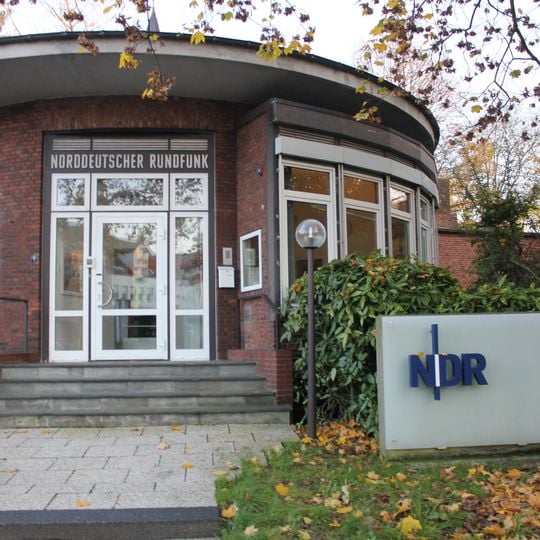
NDR-Studio Flensburg, Broadcasting studio in Flensburg, Germany.
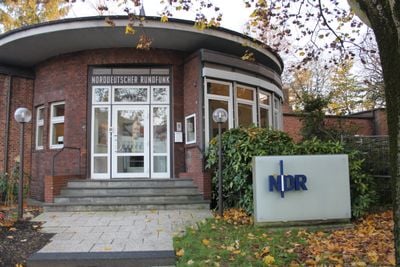
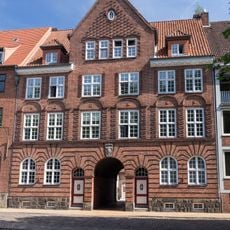
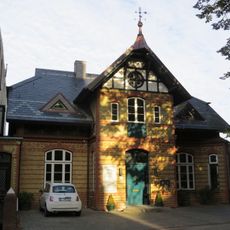
NDR Studio Flensburg occupies a red-brick building on Friedrich-Ebert-Strasse, originally the round, open music pavilion of the Deutsches Haus concert garden, built in the 1930s to designs by Paul Ziegler and Theodor Rieve. Architect Walther Beuthin added an extension likened to a comet's tail, and a small northern annex followed in 1952. The rounded corner carries a dark band reading "NORDDEUTSCHER RUNDFUNK"; a white NDR sign stands in front.
The facility was founded in 1950 as the first studio of Nordwestdeutscher Rundfunk and has served the border region since then. The building received heritage monument status in 2007 to protect its architectural features from that era.
The studio's name is tied to its border role: in 1950 the NWDR director Adolf Grimme said it should report on refugee issues and "show the flag" as a bridge-builder to Denmark. Its early programmes included Von Binnenland und Waterkant, first aired 16 May 1951, and the Low German series Bi uns in't Dörp. The building is a working studio, not open to visitors.
The studio sits at Friedrich-Ebert-Straße 1, on a corner where the round 1930s brick pavilion meets a northern annex added in 1952. It is a working broadcast site, not open to visitors; the NDR sign and the NWDR-era loudspeakers inside are not accessible on a tour.
The round core of the building was the open music pavilion of the concert garden of the Deutsches Haus, built in the 1930s to designs by Paul Ziegler and Theodor Rieve in clinker brick. When the NWDR adapted it in 1949, architect Walther Beuthin added an annex shaped like a comet's tail. Some offices still hold loudspeakers bearing the NWDR logo.
The community of curious travelers
AroundUs brings together thousands of curated places, local tips, and hidden gems, enriched daily by 92,738 contributors worldwide.