Glindower Alpen, Protected area in Werder, Germany.
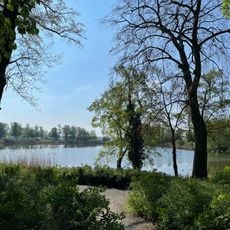
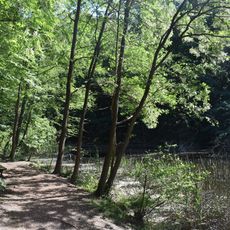
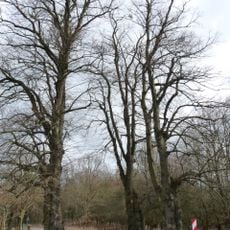
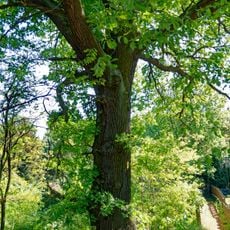
Glindower Alpen is a 119-hectare nature reserve southeast of Glindow and northwest of Petzow, both districts of Werder (Havel) in Brandenburg. It occupies the former clay pits of the Erdeberge, whose spoil heaps from centuries of brickmaking form ravines up to forty metres deep. Their slopes carry little-managed mixed woodland of sycamore, hornbeam, winter lime, ash, beech and robinia, with dead wood left lying under moss and lichen.
Clay was dug for centuries at the Erdeberge southeast of Glindow to supply the local brick industry, and the heaps of spoil left behind formed the hollows and ridges that define the site. The area, about 119 hectares between Glindow and Petzow, was designated a nature reserve by regulation of 30 June 1995 under number 1163.
The name Glindower Alpen refers to the former clay pits of the Erdeberge, whose spoil heaps from brickmaking created a relief of up to forty-metre-deep ravines. Visitors today see mesophile mixed woodland of sycamore, hornbeam, lime, ash, beech and robinia, with dead wood left in place and overgrown with mosses and lichens. Small ponds at the ravine floors are covered with duckweed.
Staying on the marked paths is important, as some parts of the reserve contain sensitive habitats that can be easily disturbed by foot traffic. Dry weather makes the visit much easier, since certain sections of the trails can become slippery or waterlogged after rain.
The name "Glindower Alpen" is something of a local joke, applied to a landscape with no real peaks, only gently rolling sandy ground that someone once thought resembled Alpine terrain. This kind of playful naming was common in the region, where flat land often got tongue-in-cheek mountain names.
The community of curious travelers
AroundUs brings together thousands of curated places, local tips, and hidden gems, enriched daily by 93,461 contributors worldwide.