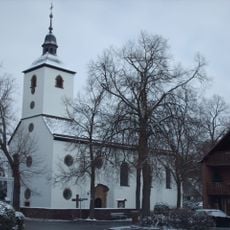
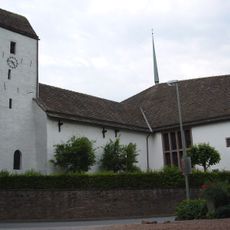
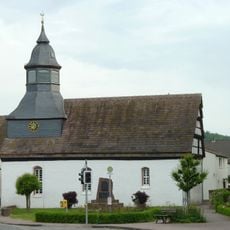
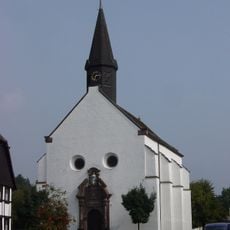
Altes Brennhaus, Historical porcelain production building in Fürstenberg, Germany.
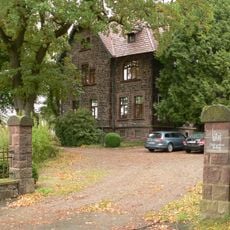
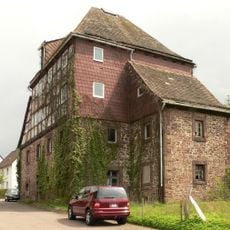
The Altes Brennhaus is an 18th-century production building with thick stone walls and multiple floors built specifically for porcelain manufacturing. The cellar still holds vaults and structural elements that once supported the large kilns.
The building was constructed around 1750 under Duke Karl I and housed some of the first porcelain kilns in the region. Over the following centuries, production declined but the structures survived.
The building's name, Altes Brennhaus, refers to its function as a firing house for the Fürstenberg porcelain manufactory founded in 1747. The oldest section was abandoned in 1889, when only the roof was removed and the hollow filled in, and the structure later served as a company apartment for manufactory workers. The excavated kilns were reburied under sand after 2012 so they can be opened to visitors later.
The oldest section, built into the hillside, was filled in 1889 and its kilns lie buried under sand since the 2009–2012 excavations; a protective roof was erected over the site. The building itself is privately owned and its condition is poor, so visits are arranged rather than spontaneous. The municipality has sought a buyer since 2014.
The main kiln found in 2009–2012 measures 3.3 by 8.6 metres and is a "lying Vienna" type, built in Germany until the late 18th century. The ovens survived to a height of 1.4 metres because the manufactory moved to Fürstenberg Castle from 1755 and no longer needed them. After excavation the site was backfilled with sand and scanned in 3D for a virtual reconstruction.
The community of curious travelers
AroundUs brings together thousands of curated places, local tips, and hidden gems, enriched daily by 93,790 contributors worldwide.