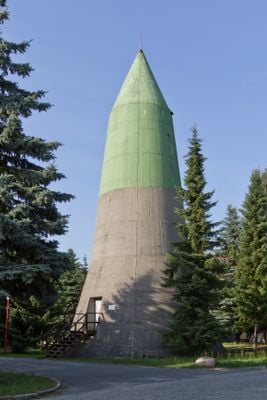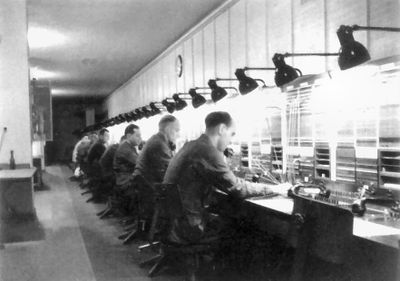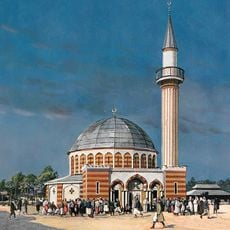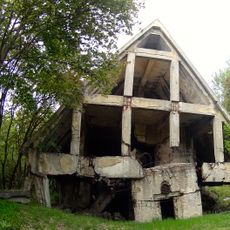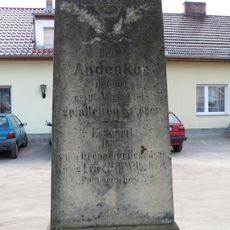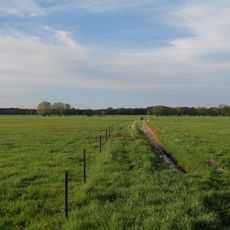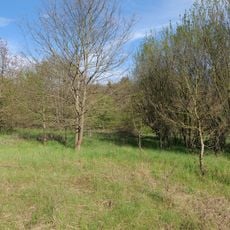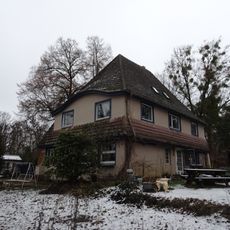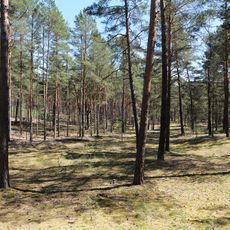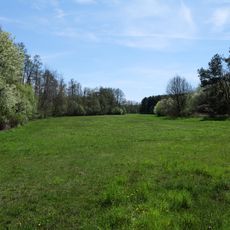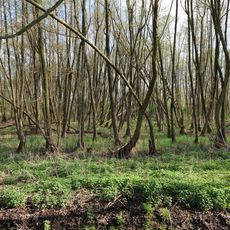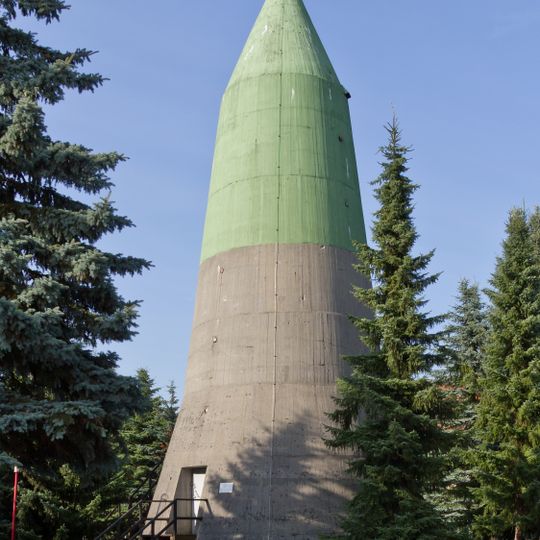
Maybach I and II, Military bunker complex in Zossen, Germany.
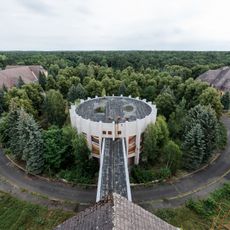
Maybach I and II were two linked bunker headquarters near Zossen: Maybach I had twelve three-storey surface buildings disguised as a housing estate, Maybach II eleven, with two floors of interlinked bunkers and two-foot-thick walls below. Deeper levels held drinking-water wells, gas-filter systems and diesel engines. The separate Zeppelin communications bunker was a 117 × 22 m two-storey block with a 57 × 40 m three-storey annex, linked to Maybach by a south tunnel.
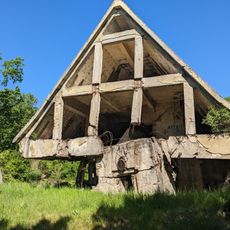
Maybach I was begun in 1937 and fully operational by December 1939; Maybach II was completed in 1940. The complexes housed the Army High Command and the Armed Forces Supreme Command. In January 1945 the army general staff moved into Maybach II, and on 20 April 1945 the site was evacuated as Soviet troops approached. The bunkers were largely destroyed by Soviet forces in late 1946.
The name Maybach comes from the Maybach automobile engine, and the code name Zeppelin originally referred only to the signals bunker before spreading to the whole command site. The Zeppelin bunker stayed the Wehrmacht's largest and most modern communications node throughout the war. A museum opened in Wünsdorf on 1 September 2009 covers 49 years of Soviet troops in Germany.
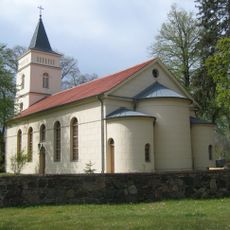
The above-ground ruins of the entrance buildings can be visited on guided tours, and a museum in the Wünsdorf Book Town holds exhibits on the town's military history and the bunker complexes. Parts of the Maybach I underground complex remain accessible through the entrance ruins, together with the neighbouring Zeppelin communications bunker, while Maybach II has been nearly obliterated.
The surface buildings featured fake windows and doors to create the appearance of a regular residential neighborhood when viewed from aircraft above. This deception was so effective that pilots flying overhead could not identify the area as a military facility.
The community of curious travelers
AroundUs brings together thousands of curated places, local tips, and hidden gems, enriched daily by 93,389 contributors worldwide.