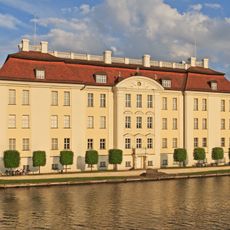
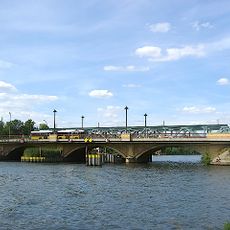
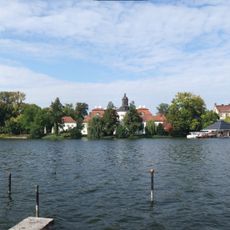
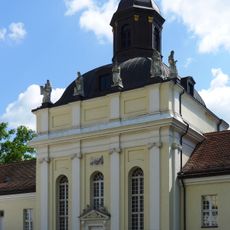
Luisenhain, Riverside park in Köpenick, Germany
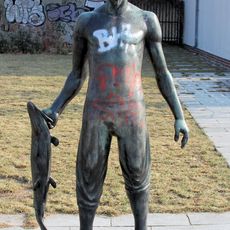
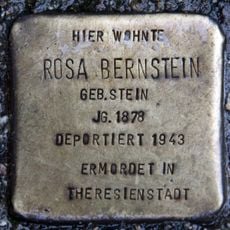
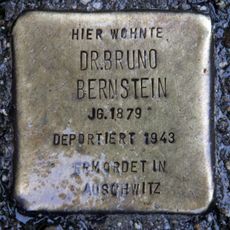
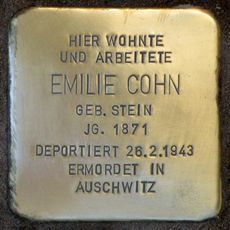
Luisenhain is a park in Köpenick's old town, between the historic centre and the Dahme bank opposite the town hall. It began as a nearly square lawn and flower garden donated in 1906 and was later extended from the Dammbrücke to the Lange Brücke. Its paths are paved with granite slabs, while the riverside promenade has yellow natural-stone slabs with bronze inlays.
A local merchant donated the land in 1906 with the intention of creating a public garden and offering people access to nature. The official opening took place in 1908 and established it as an important recreational space for the neighborhood.
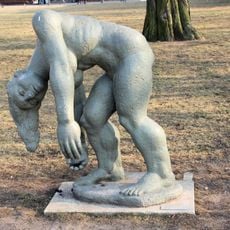
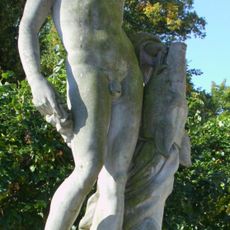
The name honours Luise Asseburg, sister of merchant Karl Otto Asseburg, who donated the land in 1906 on condition that a decorative square be laid out in her memory and kept for all time. Since 1987 the concrete sculpture Die sich Erhebende by Ingeborg Hunzinger has stood in the park; damaged, it was removed in 2012 and reinstalled after restoration in 2017.
The park is easily accessible on foot and the pathways are wide enough for strollers and wheelchairs. Visitors should note that early morning or evening hours offer the most peaceful experience with fewer people around.
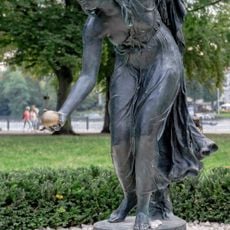
The bronze sculpture Die Kugelspielerin, showing a woman playing boccia, stood in the park until it vanished in 1950 during a wave of non-ferrous metal theft in Berlin; it was never recovered. Since 1987 the concrete sculpture Die sich Erhebende by Ingeborg Hunzinger has stood here, removed in 2012 for damage and reinstalled after restoration in 2017.
The community of curious travelers
AroundUs brings together thousands of curated places, local tips, and hidden gems, enriched daily by 94,328 contributors worldwide.