Köpenick Palace, Baroque palace on an island in Treptow-Köpenick, Germany
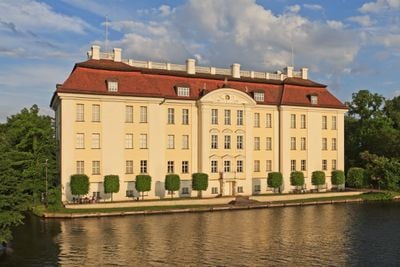
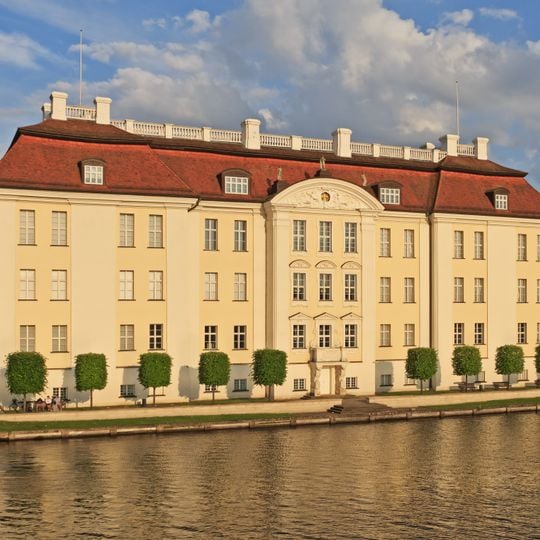
Köpenick Palace is a three-storey Baroque water palace on an island in the Dahme, its pale yellow facade divided by white pilasters into bays and capped by a red tiled roof with dormer windows and a balustrade of small urns. The central section projects and rises into a curved pediment with a round relief above a columned entrance and small balcony. It stands behind a low stone embankment along the water.
The original structure was a Renaissance hunting lodge that was fundamentally transformed in the late 1600s under Frederick I of Prussia. The ruler had the building enlarged and redesigned to create a representative residence for the royal court.
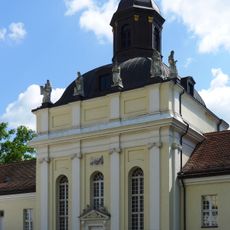
Since 1963 the palace has housed the Kunstgewerbemuseum, now the second venue of the Museum of Decorative Arts of the Staatliche Museen zu Berlin. Its permanent exhibition "RoomArt" fills 21 rooms on three floors with interior design from the 16th to 18th centuries. The Wappensaal on the second floor is the showpiece, and the eastern building next to the church holds a restaurant.
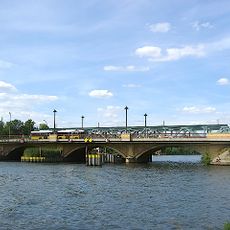
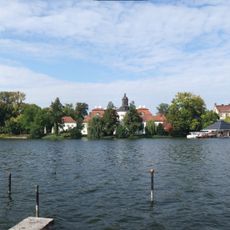
The palace stands on the Schlossinsel, reached by a bridge over the Schlossgraben; the Lange Brücke nearby crosses the Dahme to the old town and central Berlin. The museum occupies three floors in 21 rooms, and the eastern building next to the church holds a restaurant. The Schlosshof hosts concerts in summer.
The Wappensaal on the second floor is the palace's showpiece, its gallery altered in 1750 when the arcades were walled up. Panelling and a stove from a state room at Schloss Haldenstein in Switzerland were sold to Berlin's Deutsches Gewerbemuseum in 1884 and later installed here.
The community of curious travelers
AroundUs brings together thousands of curated places, local tips, and hidden gems, enriched daily by 94,392 contributors worldwide.