Altes Elektrizitätswerk, Historic power plant in Cottbus, Germany.
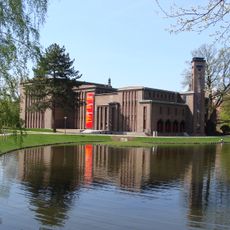
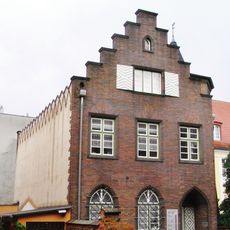
The Altes Elektrizitätswerk Cottbus is a red-brick industrial monument in neo-Gothic style, with some bricks glazed green for facade decoration. Its three parallel buildings differ in height: the taller central machine hall extends toward the Mühlgraben, the single-storey boiler house stands at its east wall, and the two-storey administration wing with attached switch house lies to the west. Pointed-arch panels, pilaster gables and corner turrets decorate the fronts.
The plant was built in 1902 and 1903 by Siemens & Halske according to the design of Cottbus city building officer Richard Bachsmann, and initially supplied electricity to Cottbus trams and 138 house connections. The facility was erected on the site of two timber-framed mills that burned down in 1882. It began operating on 27 April 1903, driven by water power from the Mühlgraben.
The building shows how the city shifted from water power to electrical supply in the late 1800s. You can see from its solid construction and green-glazed bricks that electricity was then considered something important and modern.
The building stands at Am Spreeufer 1, opposite the Goethepark and beside the Mühlgraben. Since the 2013 restoration it holds engineering offices and flats, so the interior is not open to visitors; the three brick blocks, the chimney and the green-glazed facade stones are best viewed from the public street and the park side.
The machine hall's east wall holds the single-storey boiler house, and a massive chimney rises from a plaster-decorated base beside it. The hall itself has full-height pointed-arch windows on its narrow sides and a tall pitched roof.
The community of curious travelers
AroundUs brings together thousands of curated places, local tips, and hidden gems, enriched daily by 93,158 contributors worldwide.