Wildes Moor, Protected landscape area in Rendsburg-Eckernförde, Germany
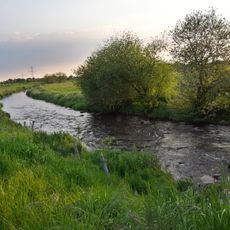
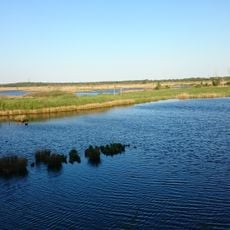
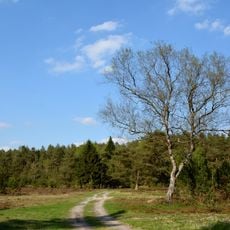
Wildes Moor is a protected landscape spanning roughly 207 hectares of wetland, grassland, and low shrubland in northern Germany. The terrain displays typical features of northern moorland with open water surfaces, spongy ground, and varied vegetation zones.
The moor formed about 5,700 years ago during the Atlantic period on an impermeable sand layer between the Jevenau and Wehrau streams. By the 19th century it covered around 900 hectares, but cultivation and peat digging reduced it to about 300 hectares by 1970, split into over 700 parcels. It was designated a protected landscape on 11 February 1953, and from 1978 the Unabhängiges Kuratorium Landschaft Schleswig-Holstein began rewetting and restoration.
Since 1978 the Verein Unabhängiges Kuratorium Landschaft Schleswig-Holstein has carried out rewetting and restoration here, and around 175 hectares now hold broad carpets of cottongrass and peat moss. The name Wildes Moor simply means "wild bog". A circular path opens the area to walkers.
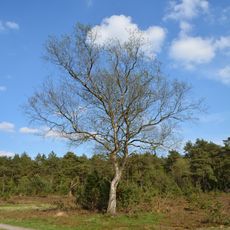
A circular trail opens up the Wildes Moor, which is split across the municipalities of Osterrönfeld, Westerrönfeld, Schülp bei Rendsburg, Emkendorf and Jevenstedt. The rewetted core covers about 175 hectares; the drier margins are dominated by birch, purple moor grass and bracken. Because birches lower summer water levels through evaporation, their growth has been kept in check.
Since 1978 the Unabhängiges Kuratorium Landschaft Schleswig-Holstein has rewetted the bog, and cotton grass and peat moss now cover about 175 hectares. Visitors can also look for adders, grass snakes and slow worms, which occur here in large numbers.
The community of curious travelers
AroundUs brings together thousands of curated places, local tips, and hidden gems, enriched daily by 93,046 contributors worldwide.