Gasthaus zum Ritter Sankt Jürgen, Medieval retirement home in Husum, Germany
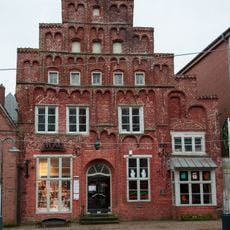
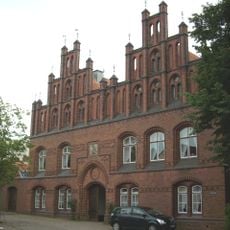
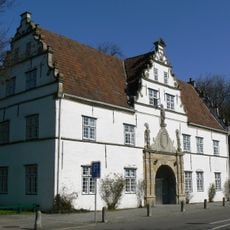
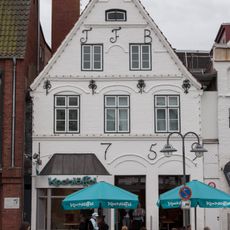
The Gasthaus zum Ritter Sankt Jürgen is a former care home in Husum featuring a striking double-gabled facade that blends Gothic and Baroque architectural styles. The building on Osterende Street continues to serve as a residential facility while maintaining its historical exterior details.
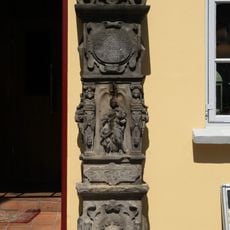
The Gasthaus zum Ritter St. Jürgen began as a medieval hospital dedicated to Saint George, recorded in the 15th century and reserved for the old, the infirm and clergy. Husum turned Protestant in 1527, and the first evangelical sermon was preached here in 1528. Duke Adolf had the complex rebuilt between 1571 and 1574, readmitting the poor who had spent four decades in the abandoned Franciscan monastery; since then the house has also been called Kloster.
Locals still call the complex "Kloster", a name it has carried since the poor residents moved here in 1571 from the abandoned Franciscan monastery. The chapel's oldest parts date to the 1563–65 building, and its pulpit was carved around 1565 by Jan van Groningen, a woodcarver working in Husum who probably came from the Netherlands.
The complex stands at Osterende 18, on the eastern edge of Husum's old town. The 1879 front building with its two stepped gables and central passage faces the street and can be viewed from the public pavement. The site is a seniors' home run by a public-law foundation, so the interior and the Predigtsaal are not open to casual visitors; the adjoining cemetery is the accessible part.
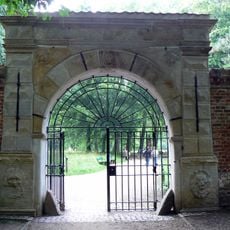
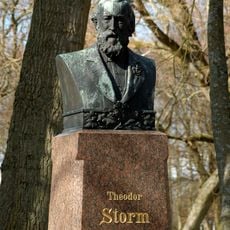
The adjacent cemetery contains the family grave of poet Theodor Storm, who featured this place in his novella In St. Jürgen. Through his writing, the location became woven into local memory and continues to attract readers interested in his work.
The community of curious travelers
AroundUs brings together thousands of curated places, local tips, and hidden gems, enriched daily by 94,127 contributors worldwide.