Kurhaus, Classical spa house in Heiligendamm, Germany
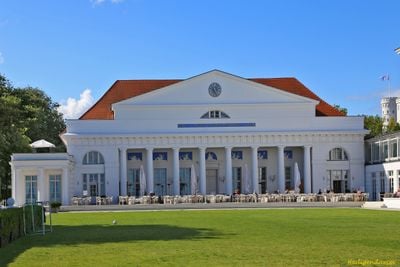
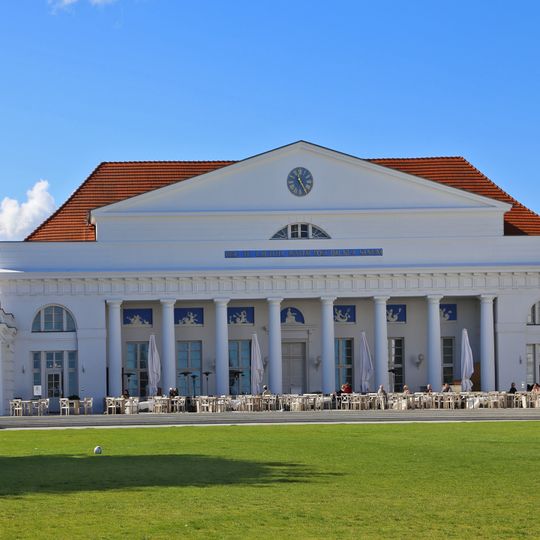
Kurhaus Heiligendamm is a classical spa building featuring a grand columned portico in Tuscan order, topped by a triangular pediment with large windows across its main facade. The structure displays hallmarks of North German classical architecture through its expansive glass openings that frame views toward the Baltic Sea.
Constructed between 1814 and 1816 under Grand Duke Friedrich Franz I's commission, this building became a pioneering example of North German classicism. Architect Carl Theodor Severin designed it as a key structure in the emerging German spa movement of the early 19th century.
Mythological carvings depicting Hygieia, goddess of healing, appear above the entrance hall and connect the building to German spa medicine traditions. These figures remind visitors of the link between health and relaxation that has defined this place since its beginning.
The building now operates as a restaurant within the Grand Hotel Heiligendamm complex and takes advantage of its Baltic Sea views through extensive windows. Visit on clear days to fully appreciate how the windows frame the seascape.
The attic area bears a Latin inscription 'HEIC TE LAETITIA INVITAT POST BALNEA SANUM' positioned above the columned entrance hall, alluding to wellbeing after bathing. This phrase draws from ancient tradition and directly connects the building to Roman bathing practices.
The community of curious travelers
AroundUs brings together thousands of curated places, local tips, and hidden gems, enriched daily by 91,319 contributors worldwide.