St. Georgi, Medieval church building in Gatterstädt, Germany.
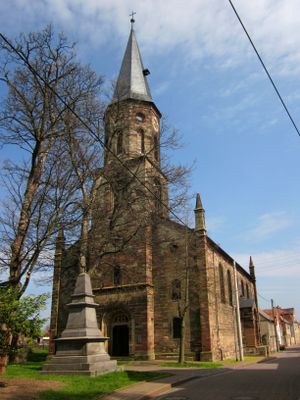
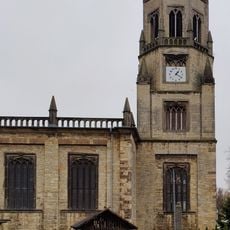
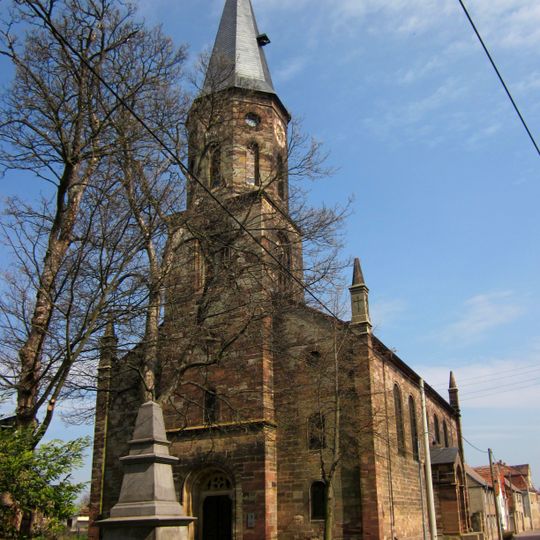
St. Georgi is a neo-Romanesque hall church built from reddish porphyry stone, with a west tower topped by an octagonal belfry and pointed spire. A rounded apse adjoins the east end, and the nave's east and west piers are crowned with plain pinnacles. Round-arched windows light the interior, and a covered entrance portal sits on the south side.
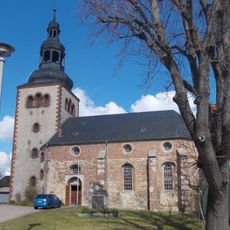
A 13th-century branch church dedicated to St. George stood about 600 metres from the older St. Petri church; a bell cast in 1478 documents its existence. The present building was erected in 1853–1856 to designs by Bauinspektor Steudener of Halle and consecrated in 1857 with almost 400 seats, after which the old Klauskirche became the cemetery church. Renovation after 1990, finished in 2005, renewed the roofs and masonry.
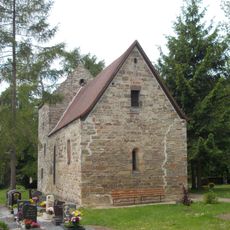
The parish belongs to the Querfurt parish of the Evangelical Church in Central Germany. The church is now used only rarely, and the old Klauskirche, replaced as the main church in 1857, serves as the cemetery church. The 1857 Wäldner organ with 23 stops awaits restoration.
The church is normally accessible to visitors, with some guided tours offering deeper insight into the architecture and history. It's best to check locally for specific visiting hours and access arrangements before your trip.
The 1857 organ by August Ferdinand Wäldner of Halle has 23 stops on two manuals and pedal with mechanical action, and is only partly playable, awaiting restoration. The large bell was cast in 1505; after losses in 1917 and 1942, two iron bells from Schilling & Lattermann completed the peal in 1964, sounding g′–a′–cis″.
The community of curious travelers
AroundUs brings together thousands of curated places, local tips, and hidden gems, enriched daily by 92,780 contributors worldwide.