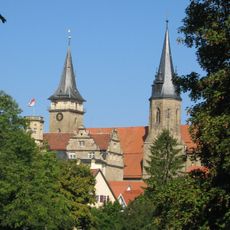
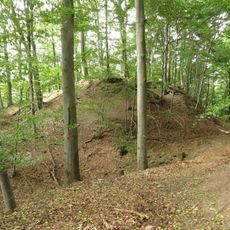
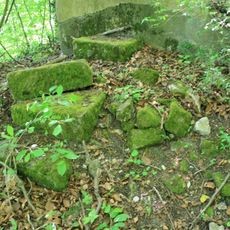
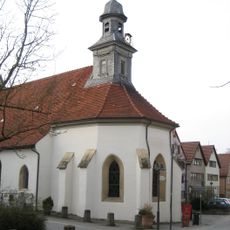
Kastell Öhringen-West, Roman military fort in Öhringen, Germany
Kastell Öhringen-West was a Roman military fort situated on a terrace between the Ohrn River and Maßholderbach stream. The roughly square installation measured 159 meters in one direction and 152 meters in the other, occupying approximately 2.18 hectares.
The fort was first identified as a Roman installation in 1766/1767 by archivist Christian Ernst Hanßelmann, who located the nearby east fort in 1768/1769. His research was prompted by a 1765 prize question from the Mannheim Academy. In 1878/1879, railway construction south of the fort uncovered a hypocaust system with brick stamps, which the Reichs-Limeskommission later linked to a bath building Hanßelmann had described.
The field name "Untere Bürg" kept the memory of a fortification alive into the early modern period, and the site had already been settled in pre-Roman times. The archaeologist Hans Schönberger found in the 1960s the remains of a house there, its ground plan given by an irregular ditch and three rows of postholes set at right angles to it.
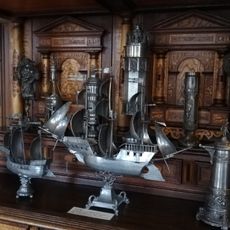
The archaeological remains are buried beneath Hohenloher Hospital and are not directly accessible to visitors. Artifacts from the site are displayed at the Weygang Museum in Öhringen, where you can see finds from the fort.
The fort evolved through several construction phases, beginning with wooden structures that were later replaced by stone fortifications. Remains of heating systems and water supply infrastructure are partially preserved, revealing the engineering standards of Roman military design.
The community of curious travelers
AroundUs brings together thousands of curated places, local tips, and hidden gems, enriched daily by 94,023 contributors worldwide.