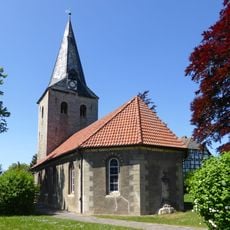
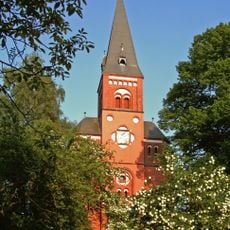
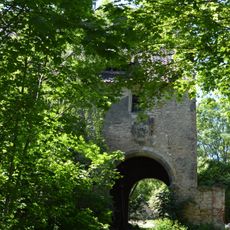
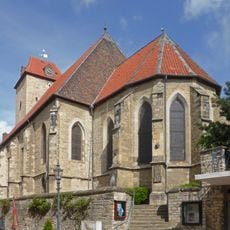
St. Lorenz, Lutheran church building in Schöningen, Germany
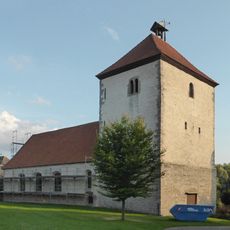
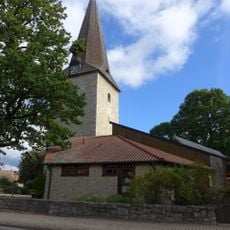
St. Lorenz in Schöningen combines a Romanesque east part with transept and choir and a Gothic nave. The two Romanesque east towers received Gothic spires in the late 15th century, and a keystone points to completion in 1491. The south tower, called "the Long One", was much taller, as an engraving by Matthäus Merian from around 1650 shows; a lightning strike in 1690 split it.
St. Lorenz grew out of an Augustinian canons' monastery founded in 1120 by Bishop Reinhard of Halberstadt, who had the dilapidated Benedictine nunnery of St. Laurentius dissolved in 1119 and settled canons from Hamersleben in Schöningen's upper town. In 1542 Johannes Bugenhagen took over the monastery for the Reformation; only the provost, one monk and some lay brothers remained. Secularised in 1648, the church has served as the Protestant parish church ever since.
The name St. Lorenz recalls the Benedictine nunnery of St. Laurentius founded in Schöningen in 983, which Bishop Reinhard of Halberstadt dissolved in 1119 because its buildings were dilapidated. Since the secularisation of 1648 the church has served the Protestant parish; the remaining monastic buildings became an agricultural estate, decayed or were demolished.
The building sits centrally in Schöningen and is easily accessible on foot from the town center. Visitors should note that this remains an active community space, so visiting hours may be limited.
The south tower, called "the Long One", was much taller, as shown in Matthäus Merian's engraving of around 1650. In 1690 lightning struck and split it; repairs followed only decades later. The north cloister survives only as a small remnant, with red-and-black painted tendrils and a Romanesque arch still visible in the adjoining passage.
The community of curious travelers
AroundUs brings together thousands of curated places, local tips, and hidden gems, enriched daily by 93,981 contributors worldwide.