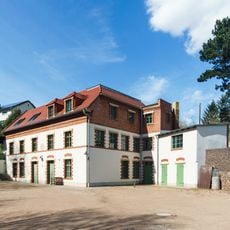
Weisses Schloss, Villa in Cossebaude, Dresden, Germany
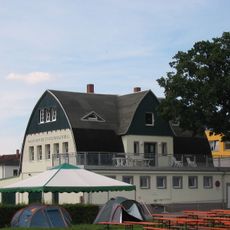
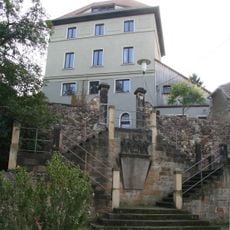
Weisses Schloss is a castle-like former factory owner's villa at Gnomenstieg 4 in Cossebaude, set apart in the Cossebauder Park on rising ground above the Elbe valley. It has three crenellated towers, the tallest rising over the whole property like a keep, a terrace with partly preserved battlements, and a two-storey living area with decorative timber framing, buttresses and oriels. The facade is now yellow.
The villa was built in the late 19th century in the neo-Gothic Tudor style, with dating ranging from 1890 to 1898–1907. In the 1920s the entrepreneur Hugo Zietz, owner of Dresden's Yenidze tobacco factory, lived here. After the Second World War, conversions created smaller flats and part of the historic interior was lost. The last tenants moved out before the villa was auctioned in November 2004, after which it was extensively restored and turned into high-quality housing.
The name Weißes Schloss (White Castle) is colloquial; the building is a former factory owner's villa, now with a yellow facade. Its castle-like look, with crenellated towers, made it a landmark of Cossebaude visible from afar. In the 1920s it was home to Hugo Zietz, owner of the Yenidze tobacco factory in Dresden.
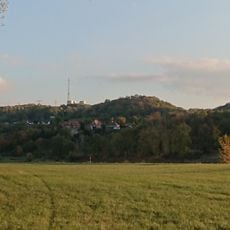
The villa stands at Gnomenstieg 4 in Cossebaude, set apart from other buildings in the Cossebauder Park on rising ground between the Elbe valley and the Meißner Hochland. It is reached on foot through the park; about 250 metres west of the villa stands the protected red beech behind the Weißes Schloss.
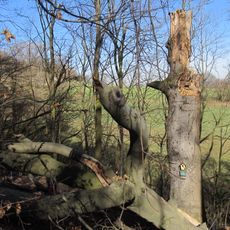
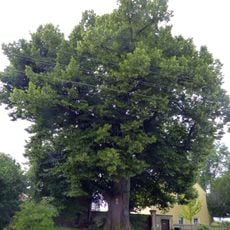
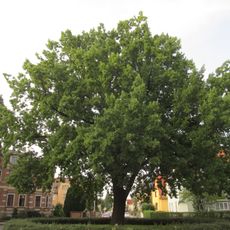
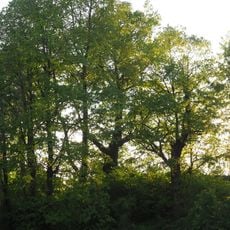
About 250 metres west of the villa, in the Cossebaude park, stands a red beech protected as a natural monument, known as the Rotbuche hinter dem Weißen Schloß; it is one of the most massive red beeches in Saxony. The villa itself is a listed monument and, with its yellow facade, is visible from far off.
The community of curious travelers
AroundUs brings together thousands of curated places, local tips, and hidden gems, enriched daily by 94,124 contributors worldwide.