Bärenhöhle, Natural cave system in Südwestpfalz, Germany
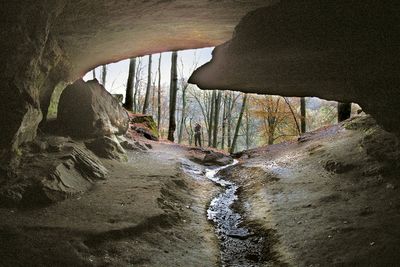
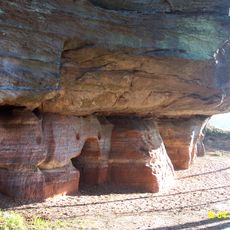
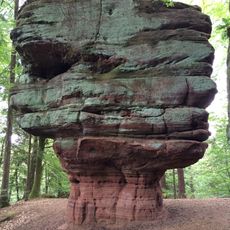
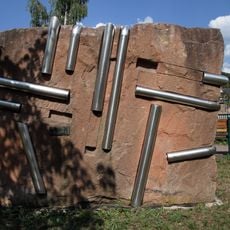
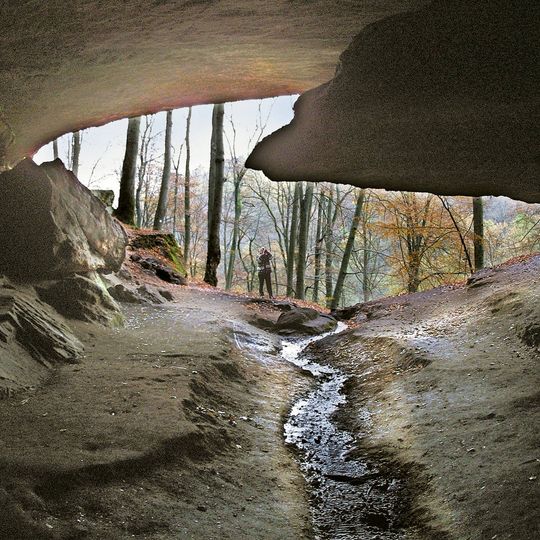
The Bärenhöhle is a sandstone cave 27 meters wide, nine meters high and about 37 meters deep, cut by erosion into a two-storey rock formation. The Bärenfelsquelle spring emerges above the cave and falls nearly 20 meters into a basin below. A rest area and a sandstone bear sculpture by Stephan Müller stand in front of the entrance.
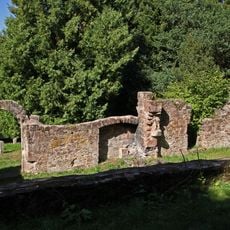
The cave was used by people around 8,000 years ago, as shown by finds of rock scrapers, arrowheads and bones with sharpened barbs; pig herders are documented as sheltering here. In 1855 Franz Weiß described a spring pouring out of the dark rear of the cave and falling into a pool below. A forest inn stood at the cave until the First World War; a stone table base and benches remain.
The name's origin is disputed: bears prefer dens with narrower entrances, so it may instead come from the surnames Bermann or Bärmann. The cave is part of the Bärenfelsen rock. Pig herders are documented as having sheltered here, and a sandstone bear by Rodalben artist Stephan Müller stands at the rest area in front.
Visits happen through guided tours led by people familiar with the local geology, ensuring safe navigation through the passages. Good footwear and a jacket are advisable since the temperature inside remains cool year-round.
Modern access enters through a location called Fauthsloch, which uses a naturally collapsed ceiling section that happened to create the perfect opening for visitors. This geographical feature is what eventually made it possible to enter the cave system regularly.
The community of curious travelers
AroundUs brings together thousands of curated places, local tips, and hidden gems, enriched daily by 92,784 contributors worldwide.