Gut Loy, Historical estate in Rastede, Germany
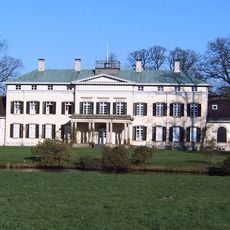
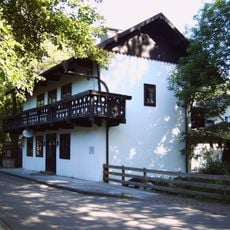
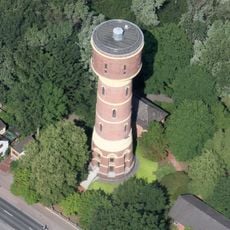
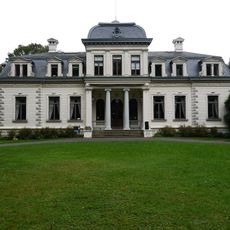
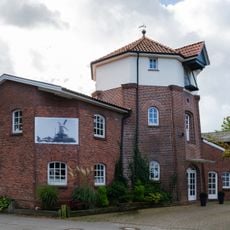
Gut Loy is an estate complex in Rastede featuring multiple buildings constructed between 1875 and 1878. The site is distinguished by a round tower that stands on a foundation of glacial boulders.
Loy appears as 'Loyge' in 1059 in the founding charter of St. Ulrich's Church in Rastede. A castle is documented in 1390, when the squire Wynand named himself after his castle 'van der Loye'. In the first half of the 15th century the squires of Bardewisch held it, and from 1450 the Lords of Reeken, first as a fief of Rastede Monastery and from 1557 of the County of Oldenburg. Burned at the start of the 16th century, it was rebuilt as a manor in the second half of that century, with the fortifications removed. In 1874 it was acquired by the later Geheimrat Funch, whose descendants still own it.
The name Loy appears as "Loyge" in 1059 in the founding charter of St. Ulrich's Church in Rastede, and the noble family "von der Loy" is documented from 1275. A squire named Wynand took his name from the castle "van der Loye" in 1390. The estate has belonged to the descendants of Geheimrat Funch, who bought it in 1874, ever since.
The estate is privately owned by the descendants of Geheimrat Funch and is not open to the public. The buildings stand in the Loy district of Rastede, in the Ammerland district of Lower Saxony. The round tower on its boulder base and the 1875–1878 manor house are best seen from the surrounding grounds.
The round tower on a boulder base, linked to the main house by a narrow connecting wing, may be the only remnant of the medieval castle; the rest of the complex was built from 1875 to 1878. The castle itself is first documented in 1390, when the squire Wynand named himself after his castle "van der Loye".
The community of curious travelers
AroundUs brings together thousands of curated places, local tips, and hidden gems, enriched daily by 93,014 contributors worldwide.