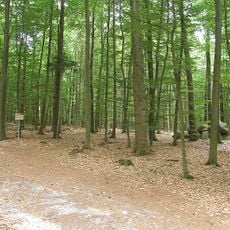
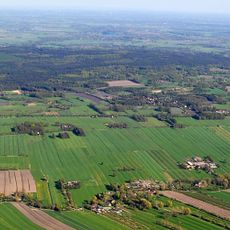
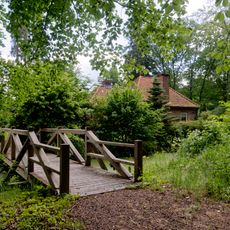
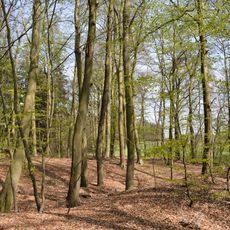
Königstanne, Remarkable tree in Wingst, Germany.
The Königstanne is a white fir (Weißtanne) in the Wingst forest, grown from seed sown in 1755 and planted in 1777. The original tree reached 45 m in height and 8.5 m in girth before it fell in a storm on 2 March 1949. Since 2006, a younger white fir about 600 m to the south, 38 m tall and 3.9 m in girth, has been designated the New Königstanne and marked with an information board.
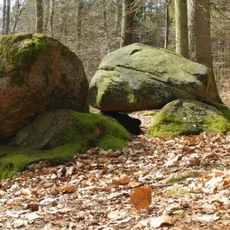
The original Königstanne was a white fir (Weißtanne) grown from seed sown in 1755 and planted in 1777 during the systematic reforestation of the Wingst ridge. It stood until 2 March 1949, when a storm felled it at a height of 45 m and a girth of 8.5 m; a memorial stone was placed about 100 m west along a forest path. In 2006 a younger fir some 600 m to the south was designated the New Königstanne.
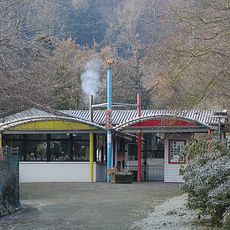
The name Königstanne ("King's Fir") has two explanations: the tree's size made it a queen among firs, or the Hanoverian flag was flown in its crown during King George V's visit in 1862. The tree appears in Wingst's municipal coat of arms, and a nearby guesthouse opened in 1929 as Gasthaus zur Königstanne.
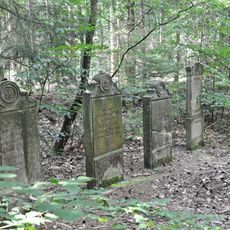
The original Königstanne stood until the storm of 2 March 1949; a memorial stone was placed about 100 m west of it along a forest path, and the old paths to the tree have since become overgrown. The New Königstanne, crowned in 2006, stands about 600 m south of that spot and carries an information panel.
The original fir, planted in 1777, was 45 metres tall and 8.5 metres around when it fell in a storm on 2 March 1949; its timber was estimated at 35 cubic metres. A memorial stone was donated and placed about 100 metres west of the site on a forest path, while the old paths to the tree have since grown over.
The community of curious travelers
AroundUs brings together thousands of curated places, local tips, and hidden gems, enriched daily by 94,035 contributors worldwide.