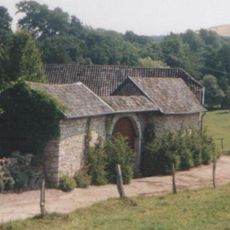
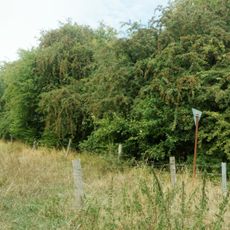
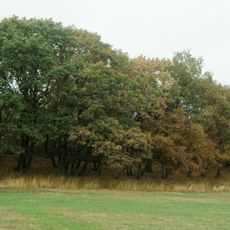
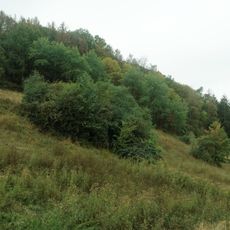
Schevenhütte Quarry, Stone quarry and brownfield site in Schevenhütte, Germany.
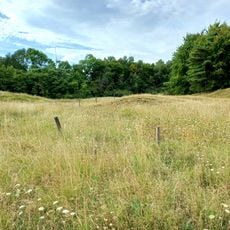
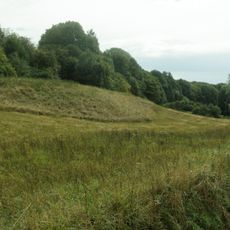
Schevenhütte Quarry is a former slate quarry at the southern edge of Schevenhütte, where the Schevenhütte strata dip very flat, unlike the steeply dipping layers elsewhere. Two varieties were extracted: a greenish banded slate with fine sand and silt streaks, and a redder, more clayey slate without sandstone. The quarry is fenced and may not be entered due to rockfall danger.
The quarry operated from medieval times until 2008 and gained prominence during the 20th century under the name Kaspar Müller I Quarry. Its long period of extraction shaped the industrial landscape of the surrounding area.
The quarry's stone was sold under the name "Schevenhütte natural stone" in a greenish banded variety and a redder, more clayey variety. The greenish rock, called Bänderschiefer, is fine sand- and silt-streaked mudstone with occasional sandstone beds. The red colour is linked to haematite and manganese oxide content.
The quarry is not accessible to visitors due to unstable rock conditions and an uncontrolled water basin that pose safety hazards. It is best to view the site from a distance and not attempt to enter the area.
The Schevenhütte strata dip very flat rather than steeply, which is what made them workable; the quarry is now the site of the oldest mined rock layers in North Rhine-Westphalia, about 490 million years old. The age was pinned down by the graptolite Dictyonema flabelliforme.
The community of curious travelers
AroundUs brings together thousands of curated places, local tips, and hidden gems, enriched daily by 94,487 contributors worldwide.