Ewiges Eis, Natural permafrost formation in Dornburg, Germany.
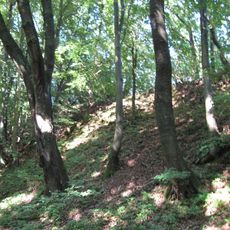
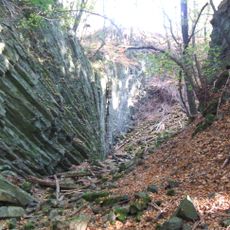
Ewiges Eis is a natural ice formation in Dornburg, Germany, which extends under basalt rubble to roughly 2 meters depth. Below that level, the ground stays frozen down to 8 meters, even when summer temperatures rise outside.
Workers discovered the ice in June 1839 while removing material for road construction. The phenomenon was surveyed and studied scientifically until 1847, and it explained the 5–6 °C temperature of the three springs at the foot of the Dornburg. In 1869 a brewery was built on the southeast slope and used the ice as a cold source, cutting the two tunnels at the foot of the slope.
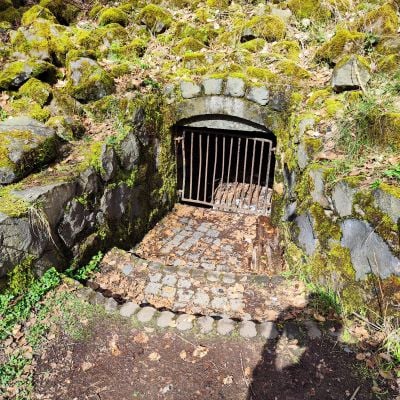
The name refers to the year-round cold inside the tunnels, where ice can persist even during summer. A brewer used the cooling effect from 1869 for beer production and created two access passages for that purpose.
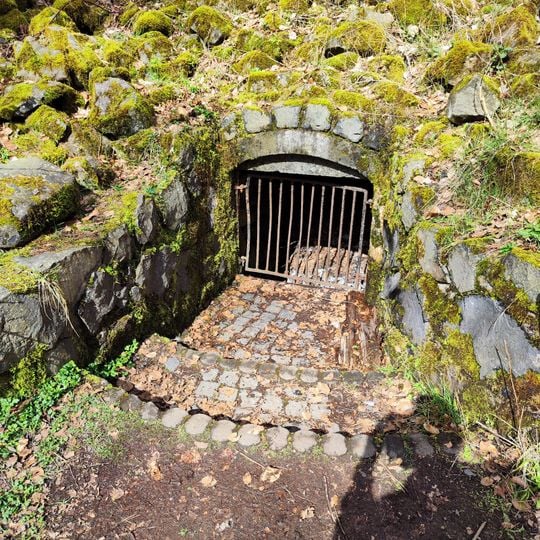
Two tunnel openings fitted with iron grilles provide access to the cold air streaming from the rock during summer. The draft is most noticeable on warm days.
In 2023, a vote organised by the Heinz Sielmann Foundation and the German Hiking Association named the Ewiges Eis one of Germany's natural wonders. The site lies in the Dornburg Nature Reserve, established in 1927, and is a geotope of the Westerwald-Lahn-Taunus National Geopark.
The community of curious travelers
AroundUs brings together thousands of curated places, local tips, and hidden gems, enriched daily by 93,491 contributors worldwide.