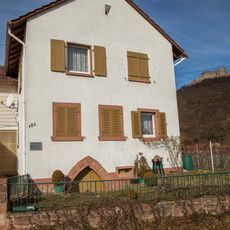
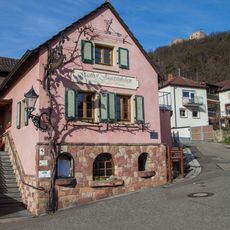
Bischöfliches Försterhaus, Episcopal forester's house in Hambach an der Weinstraße, Germany.
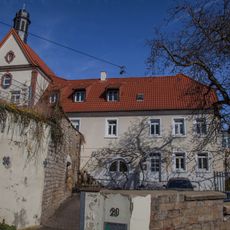
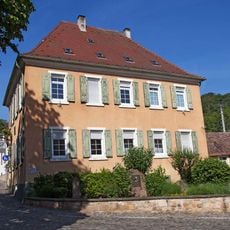
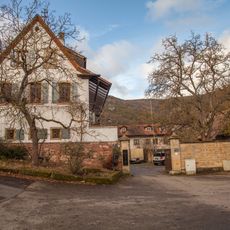
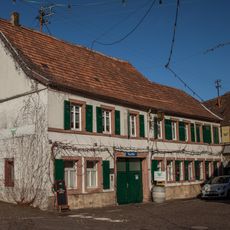
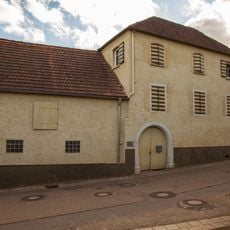
Bischöfliches Försterhaus is a courtyard complex at Andergasse 50 in the southern part of Hambach an der Weinstraße, an area often called Unterhambach. Its core dates from the late 16th century and is built in Renaissance style, with a Krüppelwalmdach (half-hipped roof) and a projecting semi-circular stair tower. The kitchen and hall lie between the rooms and the stables.
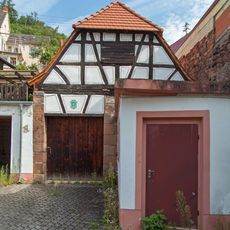
The core of the courtyard complex dates from the late 16th century. In its early period the house served temporarily as a noble seat of the Hund von Saulheim family. Later it functioned as the forester's lodge of the Hochstift Speyer, to which Hambach then belonged. The courtyard gate is inscribed 1585 and the wine cellar portal 1619.
The stone buildings display features of local construction styles with their solid walls and sturdy structures common to the wine region. The arrangement of structures around a courtyard reflects the pattern of traditional forester's estates, where residential and working spaces were closely integrated.
The buildings are located on Andergasse and are viewable from street level, with an information board explaining history and architectural details. The site is easily accessible and visitors can view the exterior and courtyard layout from the street.
The courtyard gate is dated 1585 and carries two coats of arms as keystones; the left one shows crescent moons with faces and refers to the Lords of Saulheim. The wine cellar portal bears the year 1619. In the 2000s an information panel titled "Alter Adelssitz" was mounted on the building.
The community of curious travelers
AroundUs brings together thousands of curated places, local tips, and hidden gems, enriched daily by 94,641 contributors worldwide.