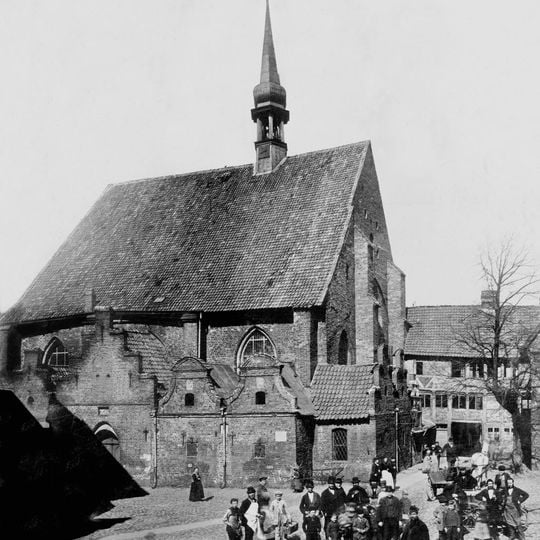
Heiligengeistkirche, Lutheran church in Kiel, Germany
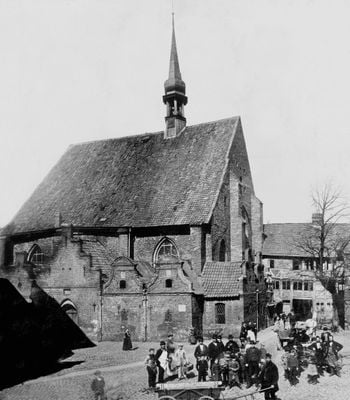
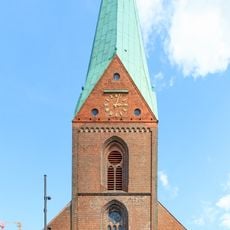
The Heiligengeistkirche was a three-aisled brick church about 30 metres long and nearly square in plan, with a small angular choir, standing between Falckstraße and Klosterkirchhof at the Alter Markt in Kiel. As a mendicant order's church it carried only a roof turret, replaced by a tower in the 1903/1904 rebuilding. Two explosive bombs largely destroyed it on 13 December 1943; the remains except the tower were removed in 1947.
Count Adolf IV of Schauenburg founded Kiel and a Franciscan monastery in 1227; the monastery church was built in 1246, about 30 metres long with three aisles and a small angular choir. The monastery was dissolved on 13 October 1530, and from 1562 the former monastic church took the name Heiligengeistkirche after the Heiliggeist-Hospital for the poor and sick that moved into the buildings in 1546. It was remodelled in Neo-Gothic style in 1881–1891 and received a tower in 1903/1904. Two explosive bombs largely destroyed it on 13 December 1943; the remains except the tower were removed in 1947.
The name Heiligengeistkirche, used since 1562, comes from the Heiliggeist-Hospital that moved into the dissolved monastery in 1546. The church served the hospital's poor and sick residents, while townspeople used it and the burial chapels added from the 16th century as a burial place into the 18th century. From 1665 it was the university church, and theology professors and students preached here until 1868.
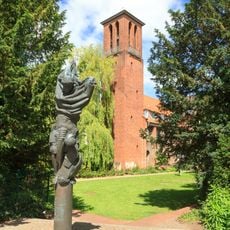
The church no longer stands; only the cloister wing and the Klosterturm remain between Falckstrasse and Klosterkirchhof near Alter Markt. The site is an open, central spot in Kiel that visitors can reach on foot. Look for the altar slab set under the crucifix in the cloister and the foundations made visible during the 2001 garden restoration.
Only one bell of the church survives: cast in 1928, it now hangs in the carillon of the Klosterturm, the simplified rebuilt tower of the Kiel monastery. The church itself was hit by two demolition bombs on 13 December 1943, and its remains were cleared in 1947 apart from the tower.
The community of curious travelers
AroundUs brings together thousands of curated places, local tips, and hidden gems, enriched daily by 93,602 contributors worldwide.