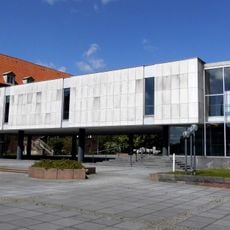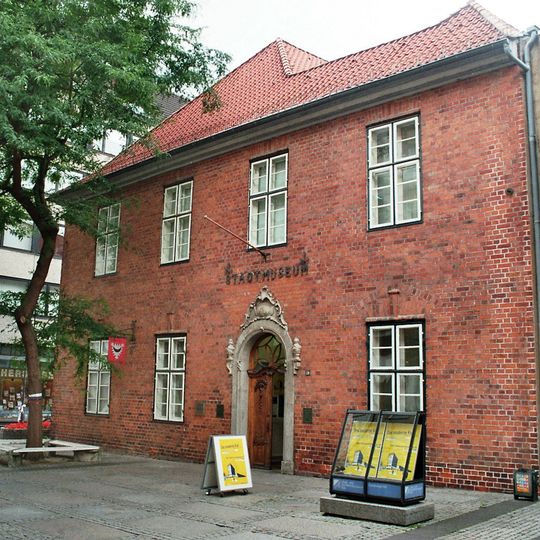
Stadtmuseum Warleberger Hof, City museum in Altstadt district, Kiel, Germany.
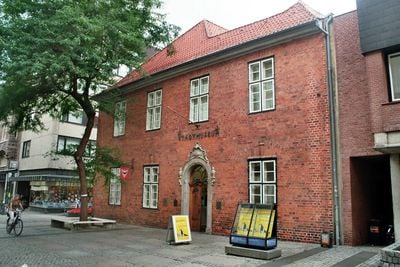
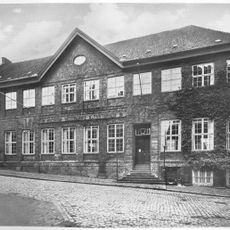
The Stadtmuseum Warleberger Hof is a three-story building displaying exhibitions on urban development, traditional craftsmanship, and graphic work from earlier centuries. Inside are objects, documents, and collections that record how people lived in Kiel across different periods.
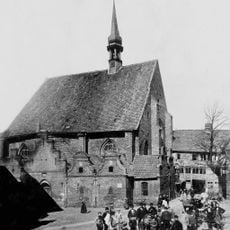
Built from 1616 for Christoph Martens, clerk to Duke Frederick III of Schleswig-Holstein-Gottorf, the palace passed to Henning von Thienen auf Warleberg in 1695, who gave it its name. Henning Bendix von Rumohr remodelled it from 1765, adding the sandstone portal and painted stucco ceilings. In 1839 the University of Kiel bought it for 6,000 Reichsthaler and used it for anatomy; the city acquired it in 1967 and opened the museum in 1970.
The museum displays how the city grew and changed through objects and documents from Kiel's past. Visitors can see through the collections how daily life and work evolved among residents over time.
The museum occupies three floors at Dänische Straße 19, with 500 m² of exhibition space; the historic vaulted cellar with its kitchen fireplace is preserved from the 1616 building. The main facade was set back about five metres in 1909 when the street was widened, and the original sandstone portal was reused. The building was renovated between 2009 and 2011.
During renovations from 2009 to 2011, workers discovered wooden beams from 1278 hidden beneath the building. The find revealed that structures had stood on this spot centuries before the current house was built.
The community of curious travelers
AroundUs brings together thousands of curated places, local tips, and hidden gems, enriched daily by 93,786 contributors worldwide.