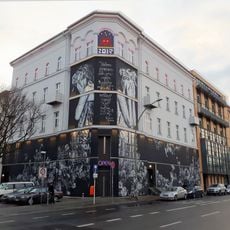
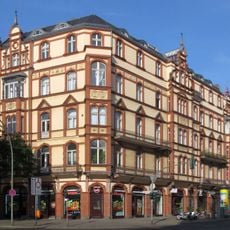
Telecommunications office, Former telephone exchange in Schöneberg, Berlin, Germany
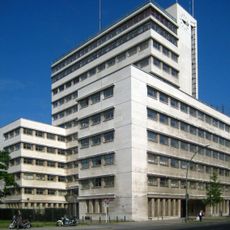
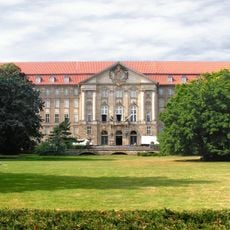
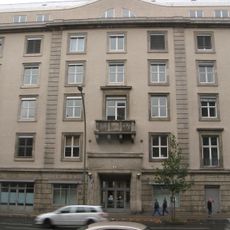
The former Fernamt Berlin at Winterfeldtstraße 19/21/23 is a listed building complex completed in 1929 for the Deutsche Reichspost as Europe's largest telephone switching centre of its time. Otto Spalding and Kurt Kuhlow designed it on a cross-shaped plan with four inner courtyards; the 90-metre street front is clad in red-brown clinker brick in the Brick Expressionist style.
Built between 1922 and 1929 to plans by Otto Spalding and Kurt Kuhlow, the Fernamt Berlin was then Europe's largest telephone exchange, costing 6.2 million Reichsmark. At its opening on 18 May 1929 it held twelve halls seven metres high for manual long-distance switching, plus the telephone directory service and a pneumatic post station. In 1932, 1140 women and 17 men worked here; after 1945 about 70 percent of its switching equipment was dismantled and taken to the Soviet Union.
The building's nickname "Fräulein vom Amt" recalls the women who manually connected long-distance calls here. In 1932, 1,140 women and only 17 men worked in the exchange, with up to 240 people per hall. Since 1958 it has housed the Fernmeldeamt 1 Berlin, and today the Telekom Innovation Arena and the publicly accessible hub:raum Café occupy parts of the complex.
The building is located in the Tempelhof-Schöneberg district and is easy to reach. Visitors can view the exterior facade and overall form from the street to appreciate the expressive architectural details.
In 1935 the Fernamt housed the first Siemens & Halske speaking clock, the "Eiserne Jungfrau", initially run on an optical sound process. During the 1936 Olympics a control centre in the Winterfeldtstraße building routed radio reports from the venues to domestic and foreign broadcasters.
The community of curious travelers
AroundUs brings together thousands of curated places, local tips, and hidden gems, enriched daily by 93,464 contributors worldwide.