Erdwerk von Wellie, Archaeological site in Steyerberg, Germany.
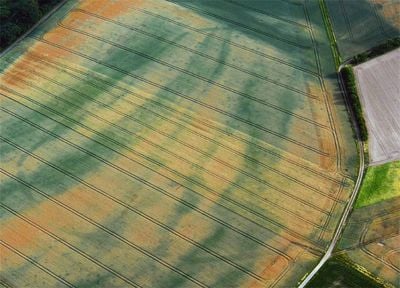
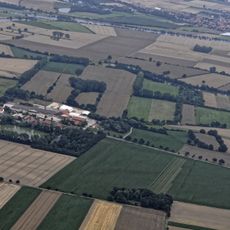
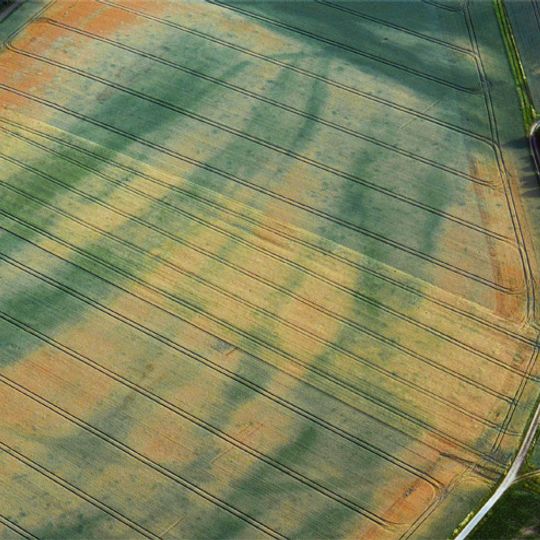
The Erdwerk von Wellie is a Neolithic earthwork defined by a former ditch that enclosed a roughly circular area of about 250 by 300 metres, covering 5.7 hectares. The ditch, now filled in, was probably several metres wide and deep and had seven interruptions by earthen bridges, likely entrances. It lies on a slight rise about 1,500 metres west of the Wellier Schleife, an old arm of the Weser.
The earthwork dates to the 4th millennium BCE and is linked to the Michelsberger Kultur. It is one of the northwesternmost earthworks in the North German Plain, alongside the nearby Müsleringen site eight kilometres away. The ditch, up to five metres wide and two metres deep, was filled in after use and was only identified in 2018.
The site shows how early farming communities worked together to create this large earthwork. The arrangement of entrances and the regular shape suggest that rituals and gatherings took place here.
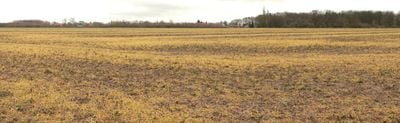
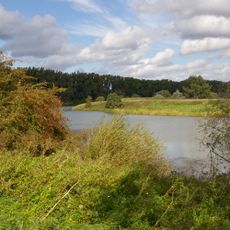
The site lies on a slight rise about 1,500 metres west of the Wellier Schleife, a former arm of the Weser, not a river. The former ditch is filled in and shows only as a cropmark in fields, so there is no visible earthwork to follow. Access is on foot; the fields are cultivated, so stay on paths and avoid crops.
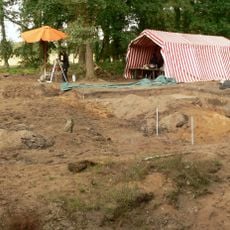
An aerial archaeologist named Heinz-Dieter Freese discovered this prehistoric site in 2018 while flying at 300 meters altitude. Geophysical surveys by the University of Göttingen in 2019 later confirmed the discovery and revealed hidden details.
The community of curious travelers
AroundUs brings together thousands of curated places, local tips, and hidden gems, enriched daily by 92,768 contributors worldwide.