Johannissteine, Natural monument in Lage, Germany
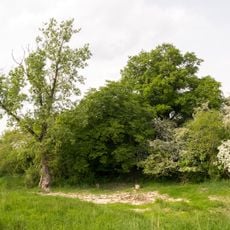
The Johannissteine are three large granite blocks located near Lage that span several meters in length and weigh many tons. They sit in an accessible spot where visitors can walk around and view them from different angles.
These granite blocks were transported here from distant northern regions during an ancient ice age. The glaciers slowly moved them across the land and left them in their current location.
The three large stones bear 15 chiselled symbols, among them hearts, pentagrams, notches and circles, plus 13 drilled holes and channels. The holes may date from between 500 and 100 BC. Farmers used the stones as a leap-year substitute to know when spring began and frost risk ended.
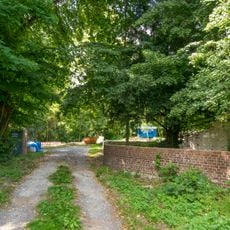
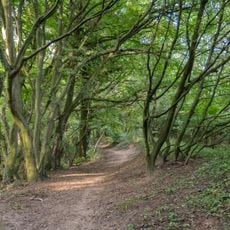
The site is reachable on foot via a well-marked path located about 1.5 kilometers from the city center. Access is straightforward and there is room to walk and explore around the stones.
Stone 1 holds three exact pentagonal holes, not five, that let rods pinpoint the winter solstice; the other seasonal turning points are read from mountain peaks such as the Windelstein, over which the sun rises at the summer solstice. The stones served farmers as a leap-year substitute, showing when spring began and frost risk ended.
The community of curious travelers
AroundUs brings together thousands of curated places, local tips, and hidden gems, enriched daily by 92,787 contributors worldwide.