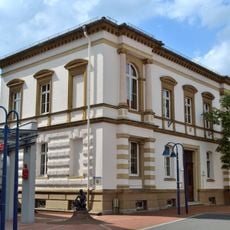
Alte Burg in Lage, Medieval castle in Lage, Germany.
Alte Burg in Lage was a timber-framed house built in 1618/19, measuring about 19.6 by 9.3 metres, with a large central hall (Diele), a heated parlour and a rear hall. It stood at the corner of Lange Strasse and Friedrich-Petri-Strasse, near the Werre river. The building was demolished in 2004 due to structural decay; the site is now protected as an archaeological monument.
The site is documented since the 14th century, when charters called it Haus zur Lage or Steinwerk, a stone house ringed by a moat; it was taken in the Everstein feud of 1404–09. In 1532 the house passed as a fief to the family von Barkhausen, and in 1589 it returned to the sovereign, who made it the residence and office of the bailiffs of Lage. The half-timbered successor building was raised in 1618/19; in 1716 bailiff Hermann Henrich Brandt bought it from Count Friedrich Adolph zur Lippe. The town acquired it in the 1980s, listed it, and demolished it in 2004 for structural decay; excavations followed in 2014–15.
The building was long used as the seat of the vogts (bailiffs) of Lage, and its name "Alte Burg" is a popular nickname rather than a record of a castle on the spot. Older cadastral maps label the property "Freier Hof". The nearby Werre crossing and the water mill demolished in the 1960s fed the guess that a castle of Lage once stood here.
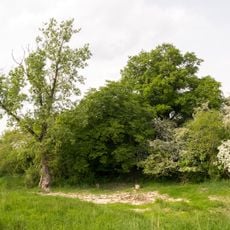
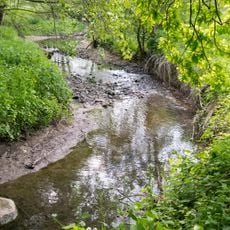
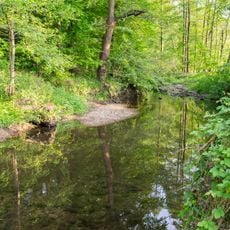
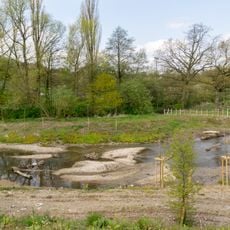
The timber house was demolished in 2004, so nothing of the building stands at the Friedrich-Petri-Straße/Lange Straße corner; the grounds are now a protected archaeological monument. Excavations took place there in 2014 and 2015, and a floor relief was uncovered during restoration work. The Werre stream runs just west of the plot, near the site of the watermill demolished in the 1960s.
The building was not a stone castle but a timber-framed official residence, dendrochronologically dated to 1618/19. Its southeastern gable originally held a large gate leading into a hall with a Flettküche; the cellar walls of up to 55 cm fieldstone were barely sunk because of the high water table. Demolished in 2004, the site is now a protected Bodendenkmal, and excavations in 2014–2015 uncovered a floor relief.
The community of curious travelers
AroundUs brings together thousands of curated places, local tips, and hidden gems, enriched daily by 92,881 contributors worldwide.