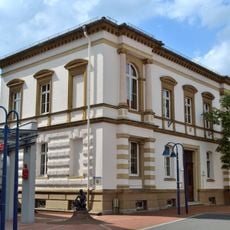
Technikum Lage, Neoclassical monument in Lage, Germany.
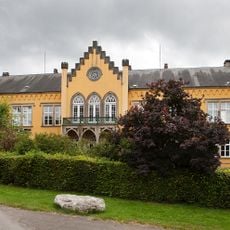
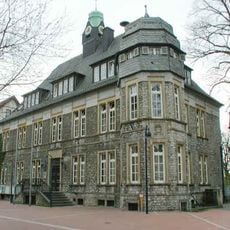
Technikum Lage is a building with neoclassical features marked by symmetrical facades and carefully balanced proportions. Its architecture displays typical elements of this style with straight lines, ordered window rows, and classical details.
Wilhelm Quest had the Technikum built between 1924 and 1926 to designs by the Lage architects Gebrüder Richts, replacing his overcrowded Lippisches Polytechnisches Institut on Lange Straße. The neoclassical building housed lecture halls, laboratory halls and a representative entrance hall. In 1926 Quest added a school for ceramic-industry engineers at the request of the Lippe government. After 1971 it housed a department of the Fachhochschule Lippe, and in 1988 it was listed as a monument.
The building's name comes from the polytechnic it housed, founded by Wilhelm Quest, who had studied at Johann Berger's earlier school in Lage. Quest died in 1930, and his brothers Karl and Paul then led the institute. Since the renovation the building has been used by the Musikschule Lage, the Volkshochschule Lippe-West and the Dotti-Stiftung.
The building stands at the corner of Lange Straße, where the main polytechnic building and the older Stammgebäude with the Mensa were both located. The entrance portal on the street side leads into the representative entrance hall, with the former director's office and secretariat above it. The site is used by the music school, the Volkshochschule Lippe-West and the Dotti Foundation, so the interior is generally accessible during their activities.
The building was erected between 1924 and 1926 to plans by the Lage architects Gebrüder Richts, and its lecture halls and laboratory halls were designed for a student body that grew from 450 to 700–800 a year after the move. Wilhelm Quest, who commissioned it, had already run a polytechnic in the Lange Straße since 1911.
The community of curious travelers
AroundUs brings together thousands of curated places, local tips, and hidden gems, enriched daily by 93,466 contributors worldwide.