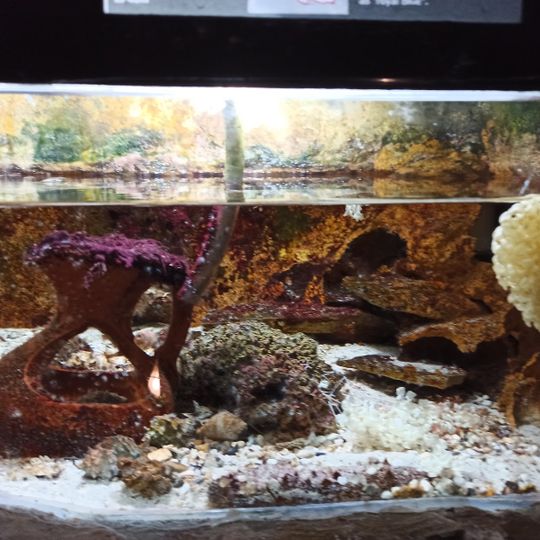
Aquarium of Rhodes, Public aquarium in Rhodes, Greece
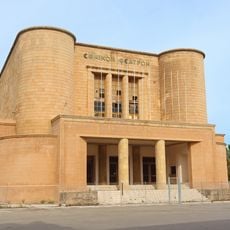
The Aquarium of Rhodes, or Hydrobiological Station of Rhodes, occupies an Art Deco building by Armando Bernabiti on the Akra Zonari headland. Its basement is a corridor of porous stone and shells made to look like an underwater cave, with tanks along both sides holding about 80,000 litres of filtered seawater. A separate freshwater tank holds the Rhodes minnow, a threatened species endemic to the island.
Construction of the Royal Biological Research Institute of Rhodes began in 1934 under Governor Mario Lago and was completed in 1935; research on Aegean hydrology, sponges and fisheries started in 1937. After the Dodecanese union with Greece in 1948, it ran as a regional station of the Hellenic Hydrobiological Institute under the Athens Academy until 1963, when it took the name Hydrobiological Station of Rhodes.
The building's decoration, from the sea-life motifs at the main entrance to the floor mosaics of marine organisms made from black and white pebbles, was designed to match its scientific purpose. The Greek Ministry of Culture has listed it as a historic monument and a notable example of International Style architecture.
The aquarium occupies the basement, reached from the building at the northern tip of the island, Akra Zonari. The visit follows a single corridor lined with tanks on both sides, so the route is linear and short. The separate exhibition area and seal tank added on the north side in 1971–72 are part of the same building.
The building displays Art Deco features with corridor-like rooms decorated with real shells from the region. Among its collection is the skeleton of a Mediterranean monk seal, approximately 2,000 years old.
The community of curious travelers
AroundUs brings together thousands of curated places, local tips, and hidden gems, enriched daily by 94,487 contributors worldwide.