Panathenaic Stadium, Multi-purpose sports venue in Athens, Greece.
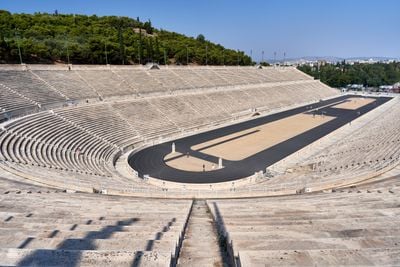
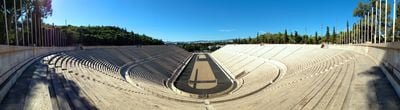
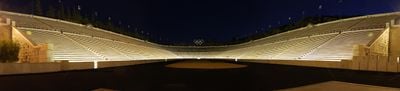
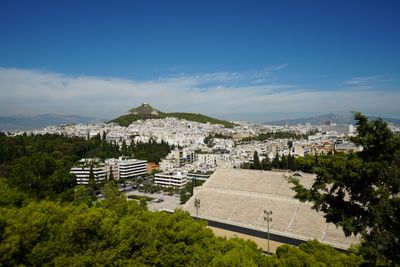
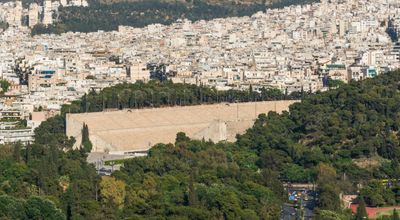
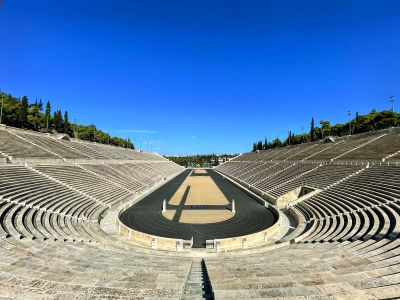
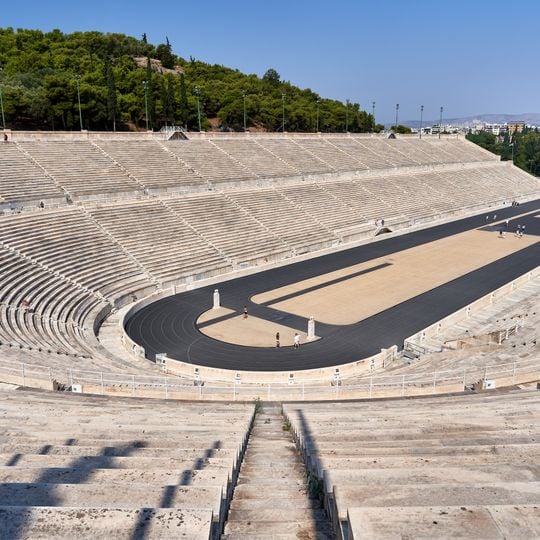
The Panathenaic Stadium is an ancient sports arena in central Athens built entirely from white Pentelic marble. The venue takes a long U-shape with straight sides measuring 204 meters in length and 33 meters in width, while spectator seating rises in 47 tiers that wrap around the running track.
Lycurgus commissioned a simple running track here in 330 BC for the Panathenaic Games. Herodes Atticus transformed it into a marble arena in 144 AD, which then fell into ruin for centuries before reconstruction for the 1896 Olympics.
The name comes from the Panathenaic Games, held here to honor the goddess Athena and drawing athletes from across the ancient world. Today visitors walk on the same track where the first modern Olympic champions competed, experiencing the white marble gleaming under the Greek sun.
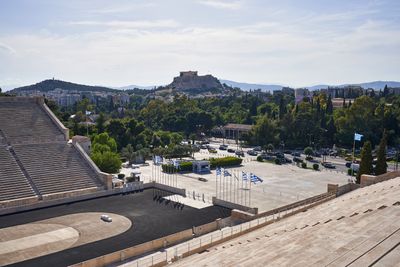
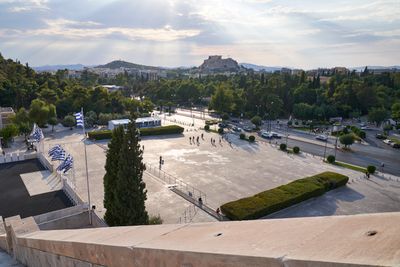
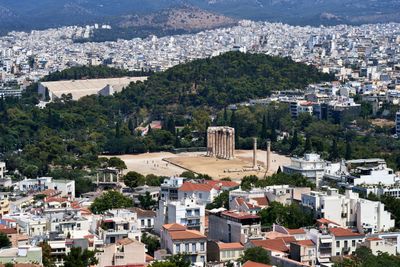
The stadium sits in Pangrati, between the pine-covered hills of Ardettos and Agra, east of the National Gardens and the Zappeion. The U opens toward the entrance side, so the curved end of the track lies at the far end from the gate. The marble tiers are steep and have no shade; the surface reflects heat at midday.
The stadium is owned by the Hellenic Olympic Committee and is the last Greek venue of the Olympic flame handover ceremony to the host nation. On 4 April 1968 it hosted the European Cup Winners' Cup basketball final, when AEK Athens beat Slavia Prague before a crowd estimated at 80,000 seated and 40,000 standing, said to be a world record for an outdoor basketball game.
The community of curious travelers
AroundUs brings together thousands of curated places, local tips, and hidden gems, enriched daily by 92,890 contributors worldwide.