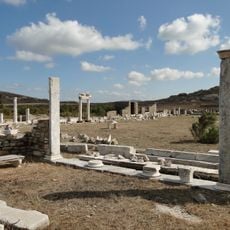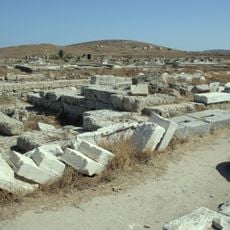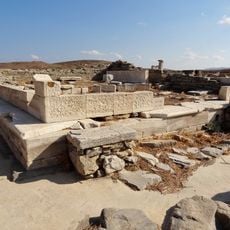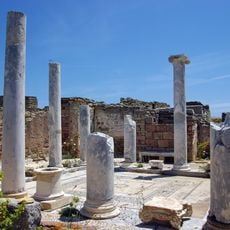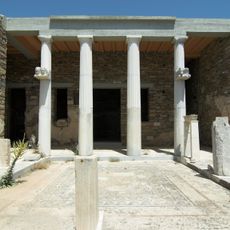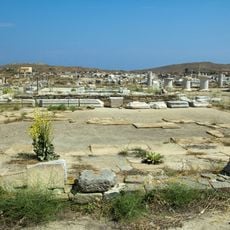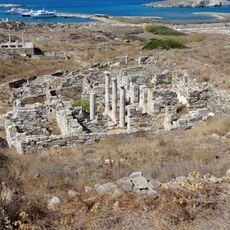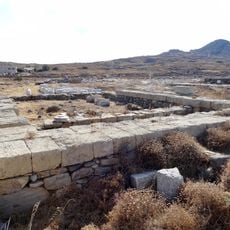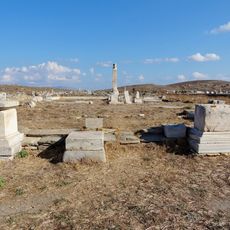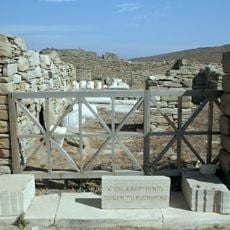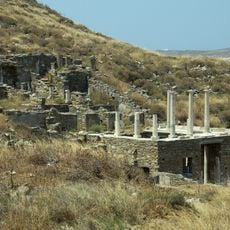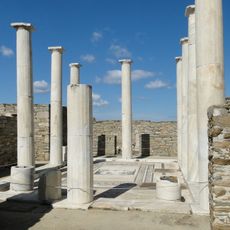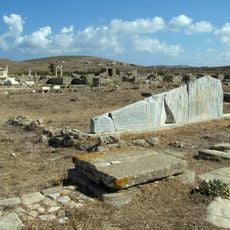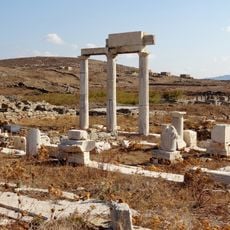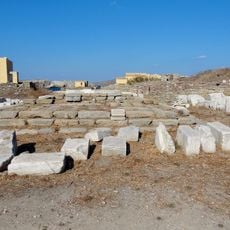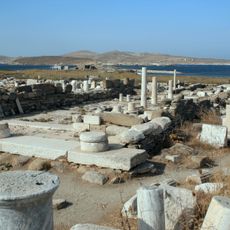
Colossus of the Naxians, Ancient marble statue in Delos, Greece.
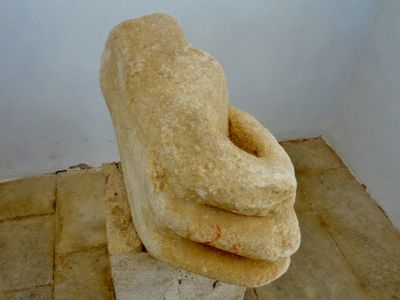
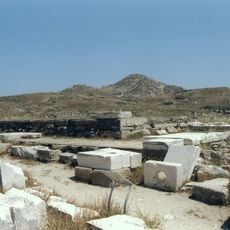
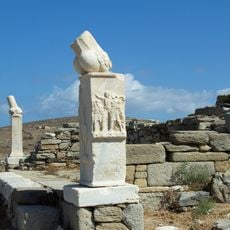
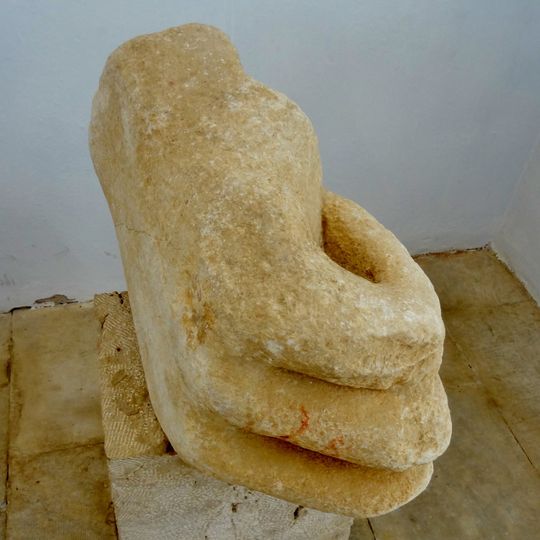
The Colossus of the Naxians is a marble kouros about nine metres tall, carved from a single block of Naxian marble and dated to the end of the seventh century BC. It is broken into several pieces: the base measures 3.48 by 5.08 metres, the upper torso about 2.3 metres and the lower torso about 1.15 metres. The head and upper legs are lost, and the left foot is kept in the British Museum.
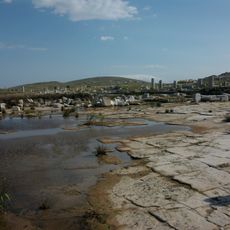
The figure was created in the 7th century BC as an offering to Apollo and originally stood on the sacred island of Delos. It broke apart in ancient times, which led to its pieces ending up in different museums and collections.
The statue displays early Greek sculptural methods through its stance and the details visible in the remaining pieces. These features reveal how artists of that period approached the human form.
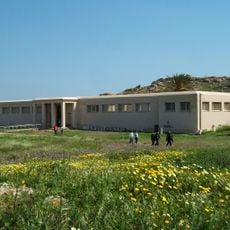
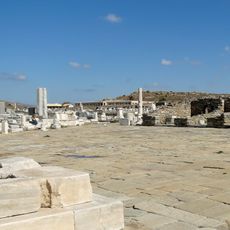
To view the fragments, visitors can go to the Archaeological Museum of Delos, which is reachable by boat from Mykonos. The best time to visit is between March and October when regular ferry connections are available.
The back of the base carries a second inscription: "I am the same stone – both statue and base", stating that figure and plinth were cut from one block. The left foot, 0.57 m long, is kept separately in the British Museum, while the rest of the fragments remain on Delos.
The community of curious travelers
AroundUs brings together thousands of curated places, local tips, and hidden gems, enriched daily by 92,923 contributors worldwide.