Minoan Fountain, Ancient public fountain on Delos Island, Greece
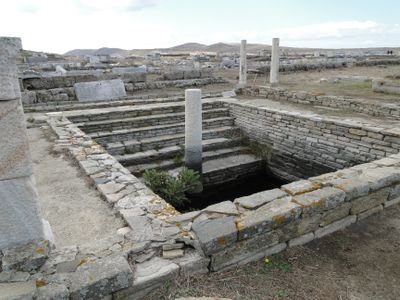
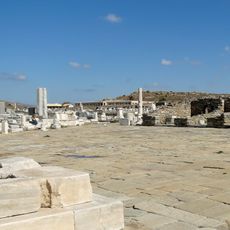
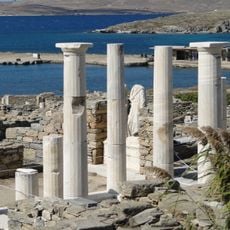
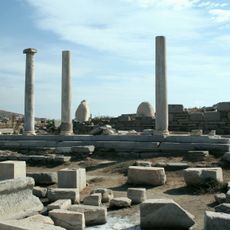
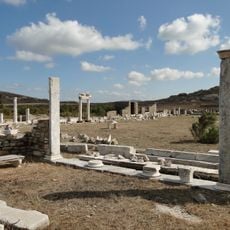
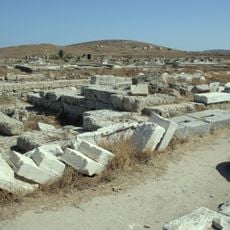
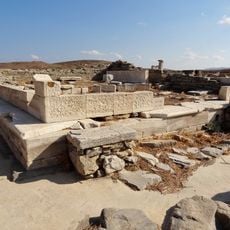
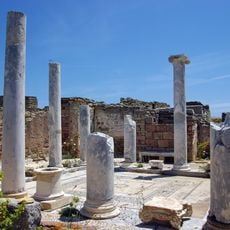
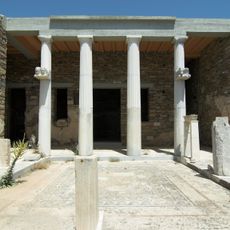
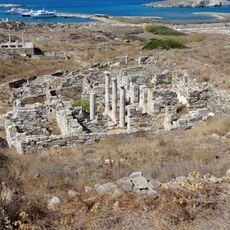
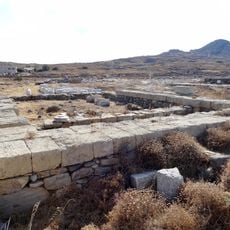
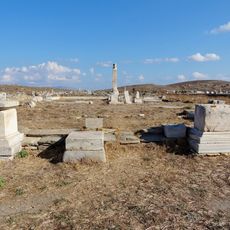
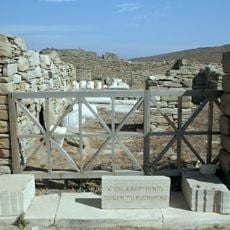
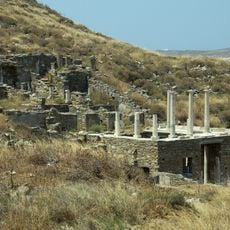
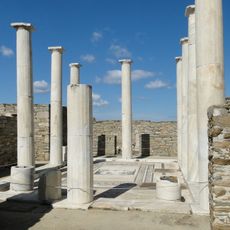
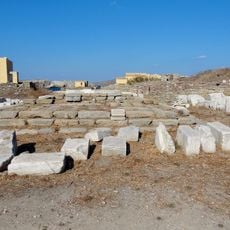
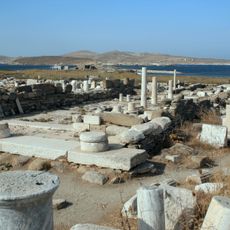
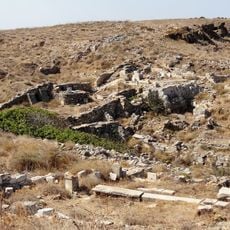
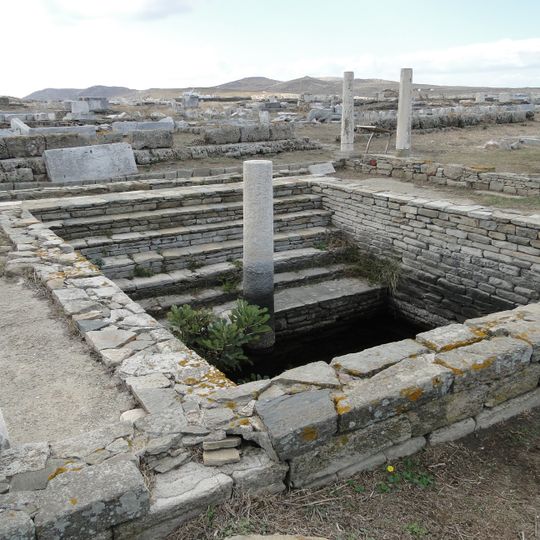
The Minoan Fountain is an ancient water source with a square building featuring a Doric portico carved directly into rock. The structure sits behind the Stoa of Antigonos and is supported by a thin Doric column that holds up the roof.
The fountain was built in the second half of the 6th century BC, when a square building with a hipped roof and walls on three sides was erected over the sacred spring. In the mid-2nd century BC repairs were carried out and the fountainhouse was decorated with a fresco of a river god and three nymphs. An inscribed stele of the 5th century BC regulated use of the spring, banning washing, swimming and throwing dung into the water.
The spring was dedicated to the Minoan Nymphs, and a mid-2nd-century BC repair added a fresco of a river god with three nymphs. A 5th-century BC stele set rules for the public fountain: no washing, swimming or throwing dung into the sacred spring, with a fine for offenders.
Visitors can descend nine stone steps on the southern side to reach the water chamber. The stairs lead to a fairly tight opening, so comfortable clothing and careful footing are recommended when going down.
Inside the structure is a fresco from the 2nd century BC showing a river god accompanied by three nymphs. This rare artwork reveals how artistic decoration adorned even functional buildings like water sources.
The community of curious travelers
AroundUs brings together thousands of curated places, local tips, and hidden gems, enriched daily by 93,643 contributors worldwide.