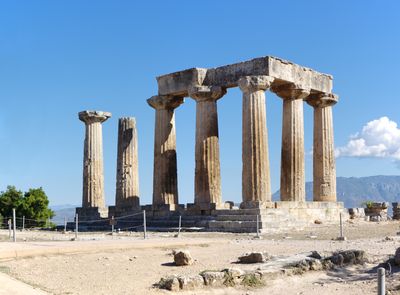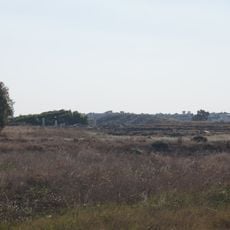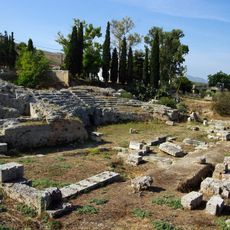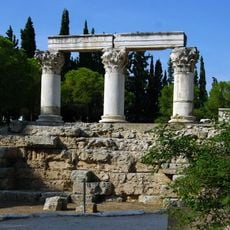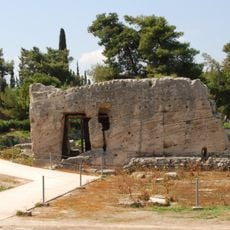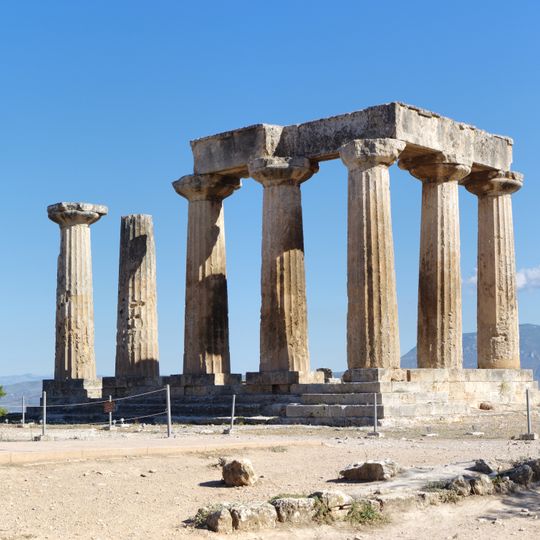
Temple of Apollo, Ancient Greek temple in Ancient Corinth, Greece.
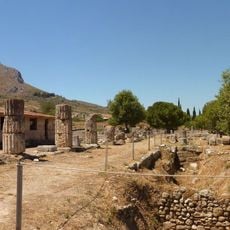
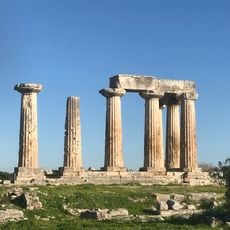
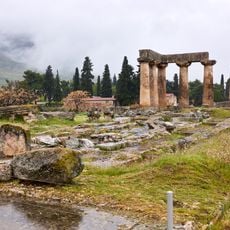
The Temple of Apollo is a peripteral Doric temple of limestone, with six columns on the front and fifteen on the long sides, over six metres tall, set on a stylobate of four high steps. Seven monolithic columns remain, each with twenty flutes and a strong taper. The cella was split by a wall into two unequal, non-communicating parts, with two rows of four columns in the larger and two rows of two in the smaller.
The first temple on the hill, built of poros limestone with a bichrome roof of yellow and black tiles, was destroyed by fire around 580 BC. The present temple was erected in 560–550 BC. Roman tiles found on the site point to repairs after Mummius's sack of Corinth in 146 BC.
The cella's unusual plan, a wall dividing it into two unequal, non-communicating chambers with two rows of four columns in the larger and two rows of two in the smaller, suggests the temple may have been dedicated to two deities and named after the greater one. Iktinos later reused this arrangement in the Parthenon.
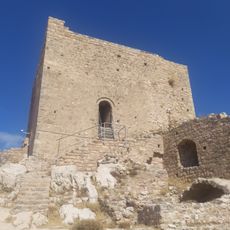
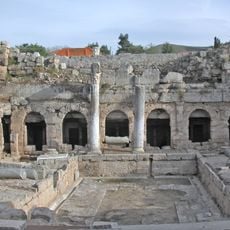
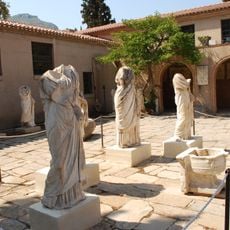
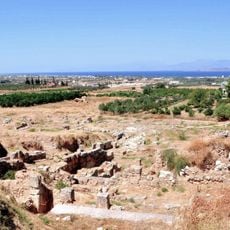
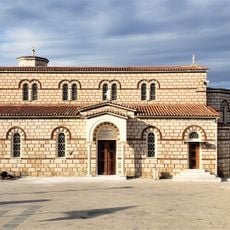
Located within the archaeological site of Ancient Corinth, the temple remains are accessible to visitors who can explore the ruins alongside nearby ancient structures and learn about its history through informational displays.
The cella was split by a wall into two unequal, non-communicating rooms, with two rows of four columns in the larger and two rows of two in the smaller; some scholars suggest the temple honoured two deities and took the name of the greater. Iktinos later reused this arrangement in the Parthenon.
The community of curious travelers
AroundUs brings together thousands of curated places, local tips, and hidden gems, enriched daily by 92,807 contributors worldwide.