Petra Monastery, Orthodox monastery in Karditsa Municipality, Greece
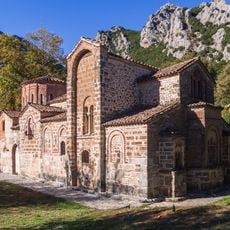
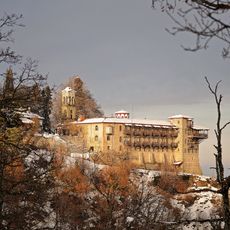
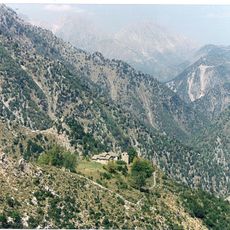
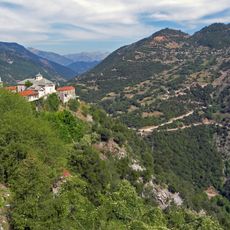
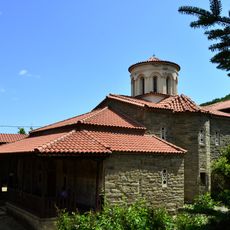
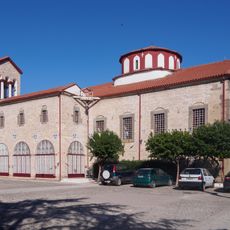
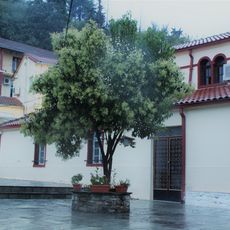
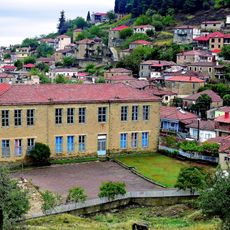
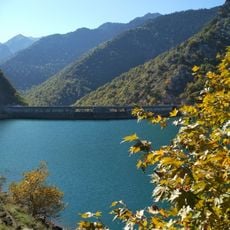
Petra Monastery stands on a high, broad rock above a mountain gorge, 27 km from Karditsa and 4 km from Lake Plastiras. Of the monastic complex, only the katholikon survives, with an attached chapel and a ruined cell building to the east. The katholikon is a four-column Athonite-type church with shallow niches and a wide narthex.
Construction of the katholikon began around 1550; a 1557 entry in the codex of Alexios Kolivas records the death of one of its leading master builders. The icon of the Virgin Glykophilousa was carried from the cave into the church in 1593, and the monks left the cave for the finished complex in 1595. The first founders, monks Filaretos, Daniel, Lavrentios and Zosimas, are listed in a 1600 memorial; the frescoes were completed in 1625.
The name Petra comes from the rock (petra) the monastery stands on, not from Saint Peter. The monastery was deserted until 1920–30, when Metropolitan Iezekiil refounded it. The hill "Three Trees" near the monastery holds an iron cross that Kosmas Aitolos planted after preaching to villagers from three villages.
The monastery is accessible by local road but offers limited visitor facilities and modern amenities. Visitors should dress appropriately as it remains an active religious site, and access may sometimes be restricted for prayer times.
The monastery's name comes from the rock (petra) it stands on, not from Saint Peter. Until 1968 a fortified wall with a gate, cells, a refectory and storerooms enclosed the complex; today only the katholikon, its chapel and a ruined cell building to the east remain.
The community of curious travelers
AroundUs brings together thousands of curated places, local tips, and hidden gems, enriched daily by 93,607 contributors worldwide.