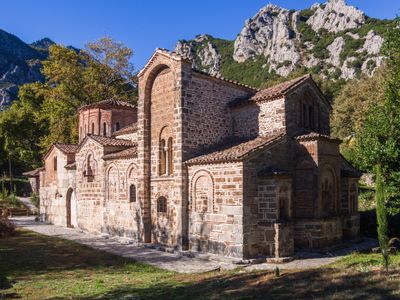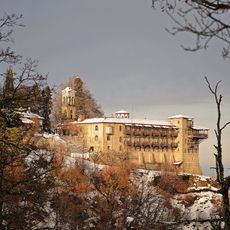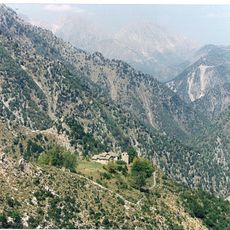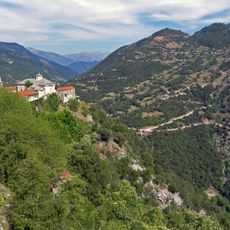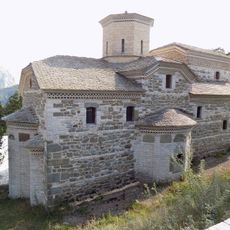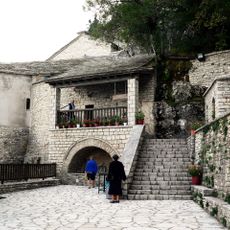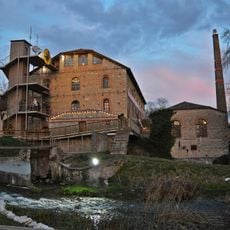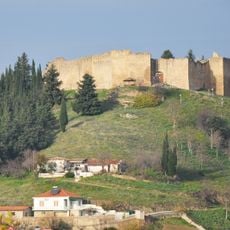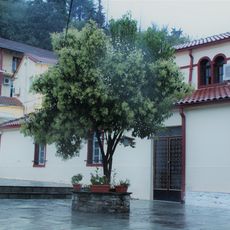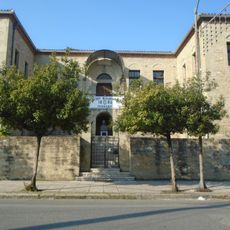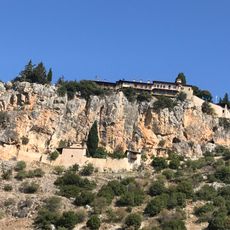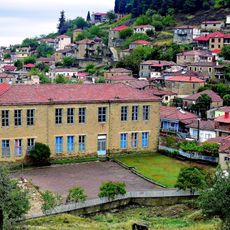
Porta Panagia, Eastern Orthodox church in Pyli, Greece.
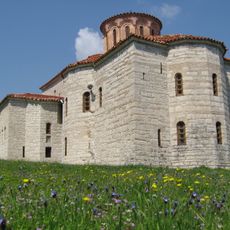
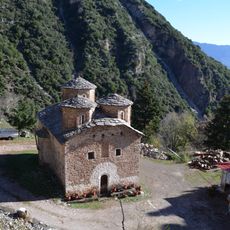
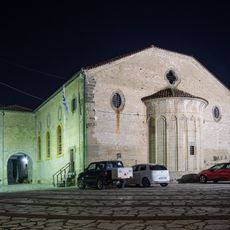
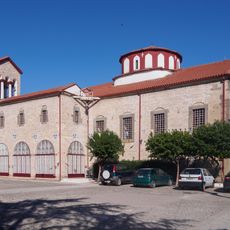
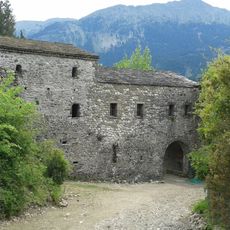
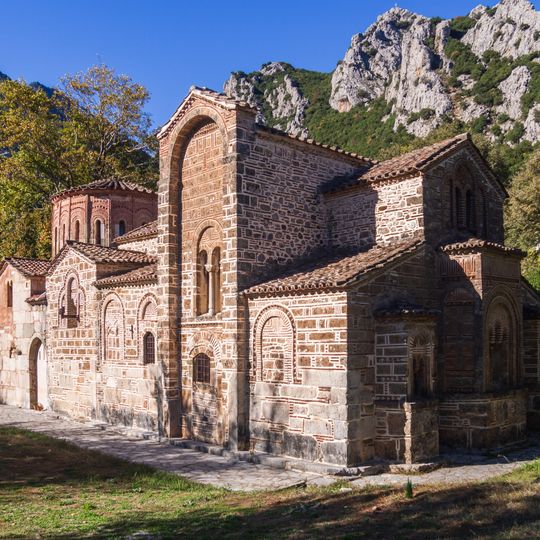
Porta Panagia is a Byzantine church near Pyli with three-sided apses and limestone walls decorated with ceramic patterns featuring jagged bands, meanders, and crosses. The building once served as the center of a monastery and contains two preserved mosaic icons inside.
The church was built in 1283 by John I Doukas, a ruler of Thessaly, and served as the main building of a monastery for centuries. Ottoman forces destroyed the settlement in 1822 during conflicts leading to modern Greek independence.
The church served as a spiritual center for communities in the surrounding area, and its preserved mosaics reveal the religious beliefs of Byzantine worshippers. Its location near mountain passes made it a place where travelers and pilgrims would have stopped to pray.
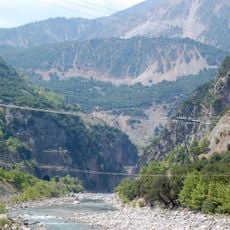
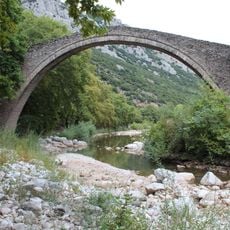
The church sits on the northern bank of the Portaikos river and is reachable on foot by following the road from modern Pyli town and walking upstream. The best time to visit is during warmer months when walking paths are dry and easy to navigate.
The exterior walls feature large limestone blocks arranged in cross patterns rising about two meters high, while double and triple arches are lined with ceramic decorations. This unusual stone arrangement is rarely seen in other churches of the region.
The community of curious travelers
AroundUs brings together thousands of curated places, local tips, and hidden gems, enriched daily by 91,259 contributors worldwide.