Monastiraki, Crete, Archaeological site in Amari Valley, Greece
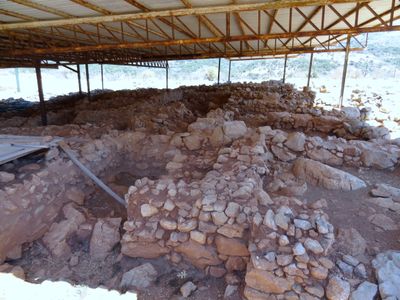
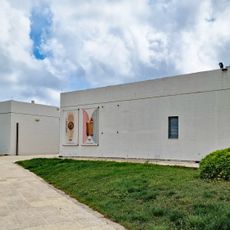
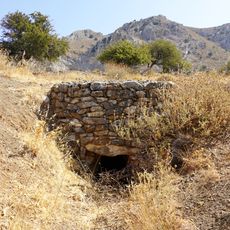
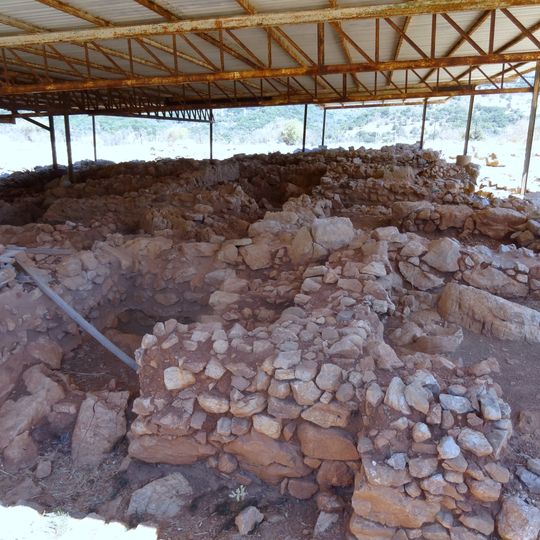
Monastiraki is the excavated complex of a Minoan palatial site around the hill Kokkinos Charakas in the Amari basin, about 200 metres from the village of the same name. Two-storey buildings on heavy walls contained storerooms with pithoi, three seal archives found in situ and sanctuaries; the south-eastern excavation area is roofed for protection. The complex covers more than 300,000 m².
The site was destroyed by fire around 1700 BC, sealing the Minoan structures and preserving them for future discovery. Modern research began in the 1980s when the University of Crete took over systematic excavations.
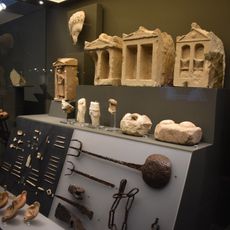
The discovery of clay sealings and archive rooms indicates this location served as a regional administrative center during the Middle Minoan period.
The excavation lies about 200 metres southwest of the village, reached by an unsorted dirt road; the entrance kiosk issues tickets and a one-page guide sheet in several languages. Photography is forbidden at the site, a rule enforced by local villagers who let visitors in. The southeastern excavation area is roofed for protection.
Photography is still forbidden at the site, a rule enforced by the villagers of Monastiraki, who are the ones who let visitors in. Excavation began under the German Archaeological Institute in 1942, working from notebooks left by British archaeologist John Pendlebury, killed on Crete on 22 May 1941.
The community of curious travelers
AroundUs brings together thousands of curated places, local tips, and hidden gems, enriched daily by 93,786 contributors worldwide.