Vosakou Monastery, Greek Orthodox monastery in Mylopotamos, Greece
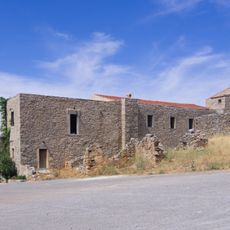
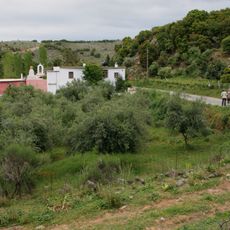
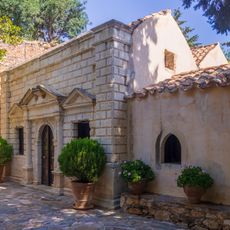
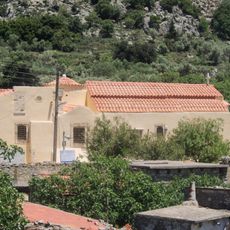
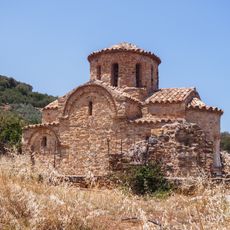
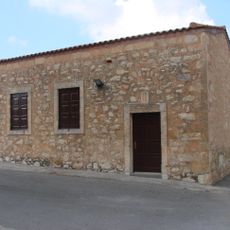
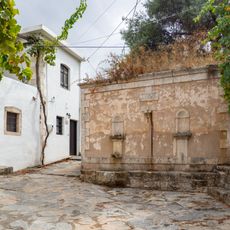
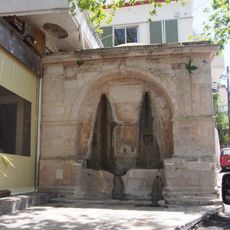
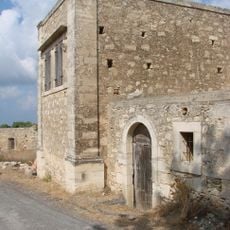
Vosakou is a monastery situated on the northern slope of a plateau in the Tallaia mountains of central Crete. The complex features three wings arranged around a central courtyard with the main church on the eastern side, along with a monumental gate and a traditional fountain.
The monastery was in use from the early 17th century; a 1629 notarial document is its oldest written mention, and an inscription over the church door records a first katholikon of 1195. In April 1676 Ecumenical Patriarch Parthenius IV made it stauropegic. It was burned during the 1821 revolution, its library and archive lost and its monks killed; only the abbot Melchisedek and the hieromonk Anthimos survived and rebuilt it.
The monastery is dedicated to the Holy Cross (Timios Stavros) and its feast is celebrated on 14 September. The name Vosakou, according to Menelaos Parlamas, comes from the Doric words for ox (vous) and enclosure (sekos), meaning an ox-fold. The south and west wings housed a honey and wax workshop and a raki distillery.
An 8 km asphalt road leads to the monastery from Kambos Doxarou, so the site can be reached by car. The complex stands on a small plateau on the north slope of the Tallaia mountains, about 50 km east of Rethymno. The gate on the east side is entered through a vaulted passage.
Menelaos Parlamas derives the name from the Doric Greek words for ox (vous) and enclosure (sekos), giving "ox-fold". The monastery stands near Kala Choria, where the Agion Pateron monastery operated alongside it in the 17th century. Look above the church entrance for the dark marble inscription stating the katholikon was first built in 1195.
The community of curious travelers
AroundUs brings together thousands of curated places, local tips, and hidden gems, enriched daily by 93,674 contributors worldwide.