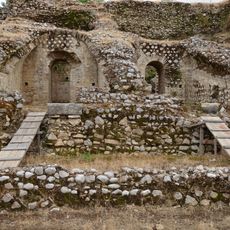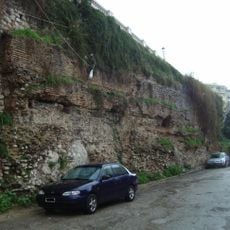
Roman aqueduct of Patras, Roman aqueduct in Patras, Greece
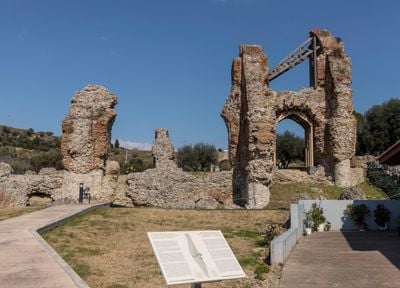
The Roman aqueduct of Patras is a water channel that carried water from the Romanos springs to the city's acropolis across several kilometers. The system used underground conduits and stone arches to carry water over valleys and uneven terrain.
Emperor Hadrian ordered the construction of a major water storage facility at the Romanos springs on Mount Panachaiko during Patras' Roman period. The system operated into the 17th century, demonstrating the long-lasting durability of Roman engineering.
An inscription found at the Romanos springs shows that Nymphs were worshipped there, so the spring that fed the aqueduct was also a cult site. The aqueduct itself stayed in use until the late 18th century and was repaired several times, the last time in 1838 by mayor I. Boukaouris; piped water reached the city in 1874 and ended its use.
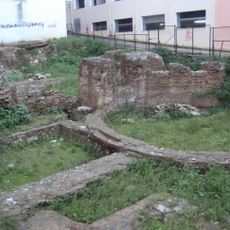
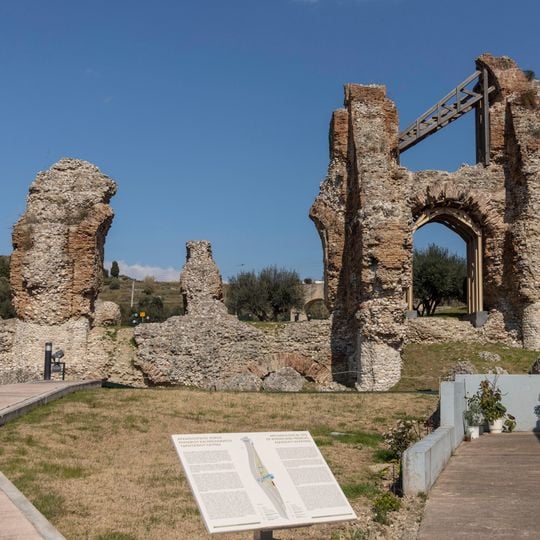
An archaeological park opened in 2018 displays sections of the Roman and medieval aqueducts and is easily accessible to visitors. Additional remains can be found scattered throughout the city, particularly in the Asyrmatos neighborhood.
In 2006, while digging the short bypass road, workers found a second, Ottoman-era aqueduct about 40 metres long, just 157 metres from the Roman ruins near the Aroi bridge. In 2009 a 23-metre section was cut out and moved next to the Roman aqueduct, and since 2018 both stand in one archaeological park.
The community of curious travelers
AroundUs brings together thousands of curated places, local tips, and hidden gems, enriched daily by 93,291 contributors worldwide.