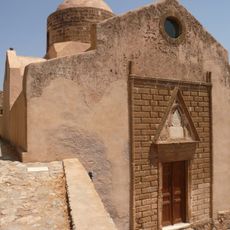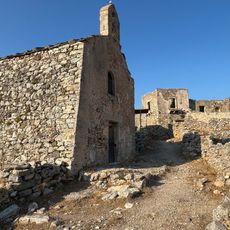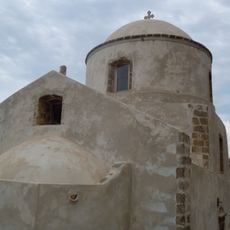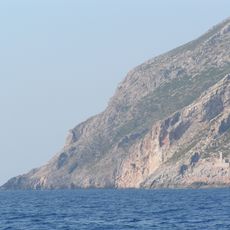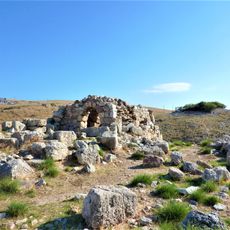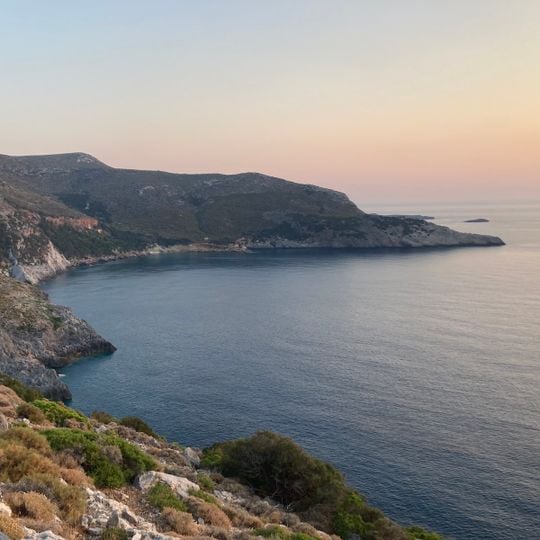
Agia Sofia Cave, Cave church on Kythira, Greece
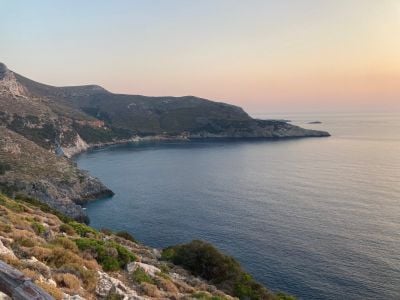
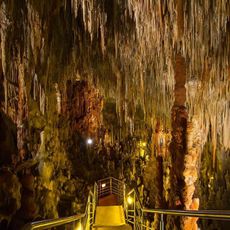
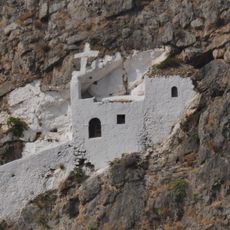
Agia Sofia Cave is a large cave church set into a sea cliff on the west coast of Kythira, Greece. The interior opens into broad chambers with stalactites and stalagmites in black, white, and red, with some spaces rising around seven meters high.
The first systematic exploration of the cave was carried out in 1930 by Ioannis Petrocheilos, founder of the Hellenic Speleological Society. In 1955 the Petrocheilos couple explored and mapped the cave, and in 1970 Anna Petrocheilos completed the study for its development.
Tradition holds that the body of Saint Sophia was found inside the cave, which is why the iconostasis in the first chamber carries rare 13th-century icons. Deeper in the cave stands the small chapel of Agia Sofia, where the iconostasis and its paintings can be seen.
Wear shoes with good grip since the path from the entrance can be uneven and sometimes damp. The cave keeps a steady cool temperature, so a light jacket helps even in summer.
The cave is home to the small isopod Kithironiscus paragamiani, an animal recorded from this cave. The cave covers 2,000 square metres, of which 200 metres can be visited. It is open to visitors each year from 1 July to 15 September.
The community of curious travelers
AroundUs brings together thousands of curated places, local tips, and hidden gems, enriched daily by 94,050 contributors worldwide.