Faneromeni monastery, Salamina, Orthodox monastery in Salamina, Greece
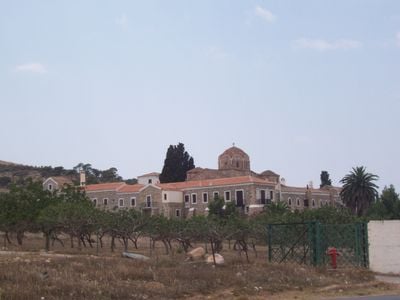
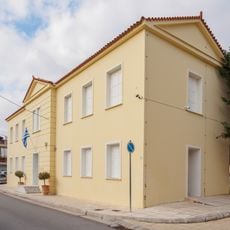
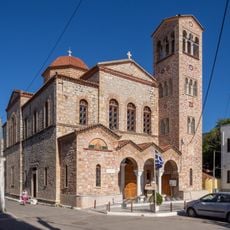
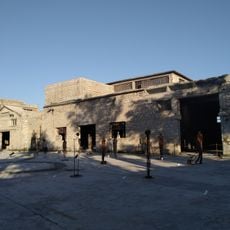
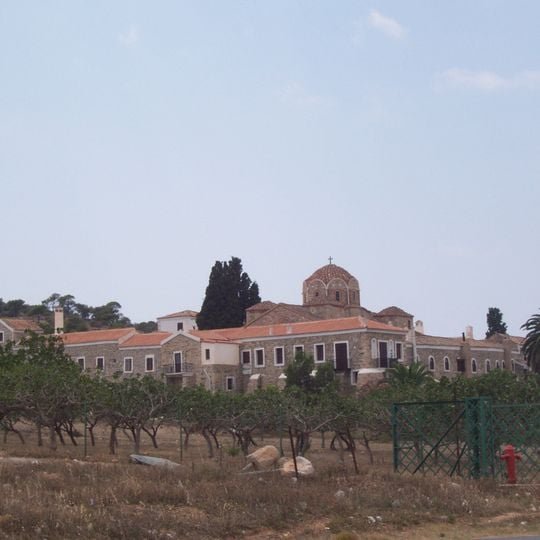
Faneromeni monastery is a fortified complex on the northwestern coast of Salamina, built around a central courtyard. Its long stone building has a tiled roof, white plaster trim, and a central dome with a cross. The katholikon interior holds post-Byzantine frescoes dated 1735 by Georgios Markou of Argos and his students.
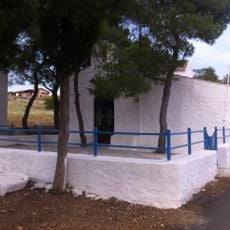
Lampros Kanellos, a resident of Megara, restored the ruined church on Salamina's northwestern coast and founded the monastery in 1682 after finding an icon of the Virgin there. He and his wife became monastics; he was tonsured Lavrentios and died on 6 March 1707. The monastery sheltered civilians and fighters during the 1821 revolution, and its abbot Grigorios Kanellos was a member of the Filiki Eteria. The chapel of Prophet Elias southeast of the monastery, intact until 1944, was destroyed by the Germans that year.
The name Faneromeni refers to the icon of the Virgin that founder Lampros Kanellos found after, by tradition, seeing her three times in a dream. The icon was discovered among the ruins of an older church on the site. The monastery is dedicated to the Dormition of the Virgin, and its feast draws pilgrims from Salamina, Megara and Attica.
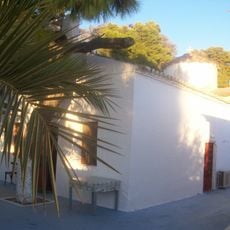
The monastery sits in a natural seaside setting and visitors should be ready for narrow paths through pine vegetation. The best time to visit is on cooler days, as shade is limited and the sun is direct.
The church's post-Byzantine frescoes were painted in 1735 by Georgios Markou of Argos and his pupils, and they cover about 3,530 figures and scenes. The monastery also keeps a large collection of old documents and historical relics. In the courtyard stands the grave of the chieftain Giannis Gouras.
The community of curious travelers
AroundUs brings together thousands of curated places, local tips, and hidden gems, enriched daily by 93,864 contributors worldwide.