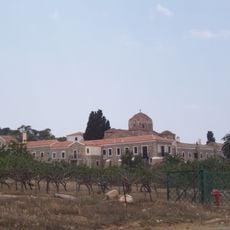
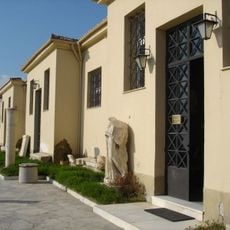
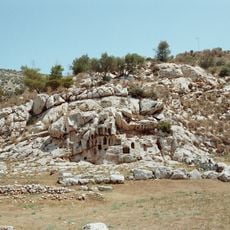
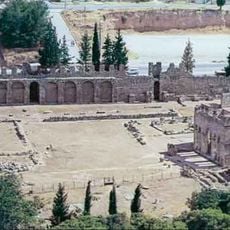
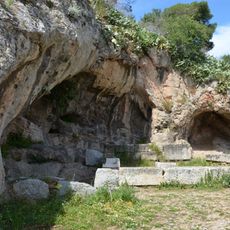
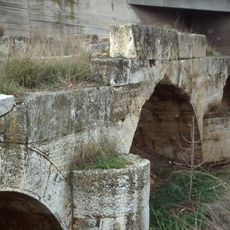
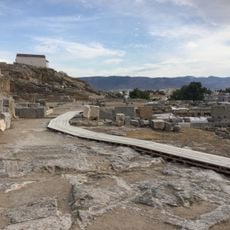
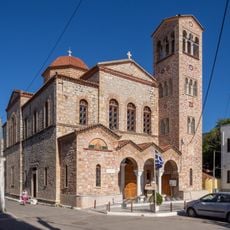
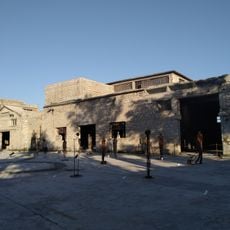
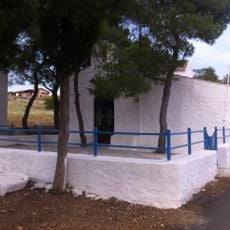
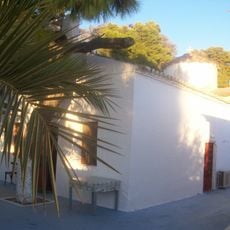
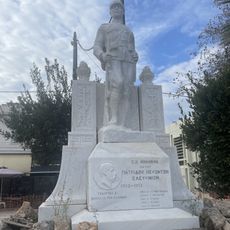
Telesterion, Ancient religious structure in Elefsina, Greece.
The Telesterion is a rectangular hall in Elefsina containing forty-two interior columns arranged in a grid pattern to support its stone roof structure. This massive columned hall could hold several thousand people, with tiered seating areas built into its interior walls.
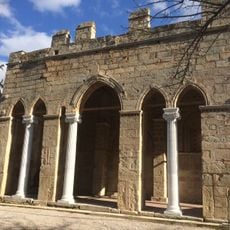
The Telesterion was built in the 7th century BCE and rebuilt in ten phases. The Persians burned it in 480 BCE; Kimon began reconstruction, which Pericles entrusted to Iktinos around 445 BCE. Philon added a twelve-column Doric portico around 318 BCE. The Costoboci destroyed it in 170 CE and Marcus Aurelius rebuilt it larger; Alaric's Visigoths destroyed it in 396 CE.
The name Telesterion comes from the Greek word for "to initiate", and Plutarch is the source of the term, rarely used in antiquity. Initiates entered at the climax of the nine-day festival of Eleusinia, held from the 15th to the 23rd of Boedromion, to see the sacred relics of Demeter. Aeschylus, a native of Eleusis, was himself initiated here.
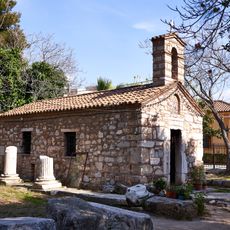
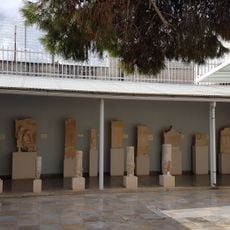
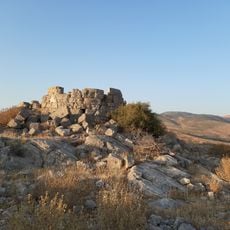
The site is located within the main archaeological complex of ancient Elefsina, making it easy to explore the remains. Visitors should wear sturdy footwear and allow time to wander through the somewhat uneven terrain.
The name Telesterion comes from Plutarch and was rarely used in antiquity; the building resembled a performance hall more than a temple. Inside stood the anaktoron, the chamber holding Demeter's sacred image, beside the throne of the Hierophant who led the rites.
The community of curious travelers
AroundUs brings together thousands of curated places, local tips, and hidden gems, enriched daily by 92,834 contributors worldwide.