Daphni Monastery, Byzantine monastery in Chaidari, Greece
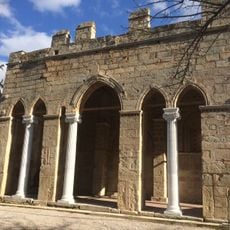
Daphni Monastery is an 11th-century octagonal cross-in-square church with a broad central dome, its exterior in cloisonné masonry of rectangular stone blocks framed by red brick. The facade has three arched openings, the left and middle ones each carried on a pair of thin pale columns, and a reddish-brown tiled dome with small arched windows rises above the right side. Inside, the dome and walls carry gold-ground mosaics of about 1100.
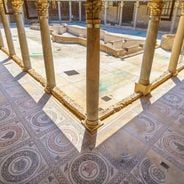
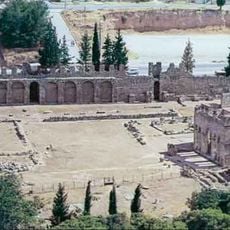
The monastery was founded at the end of the 6th century on the site of the Sanctuary of Apollo, destroyed by the Goths in 395. In the 11th century the old basilica was demolished and replaced by the octagonal church, built around 1080 with craftsmen probably brought from Constantinople. Frankish crusaders sacked it in 1205, and the Cistercians added a cloister and twin pointed arches to the facade. In 1458 the Turks handed it back to Orthodox monks.
The name is linked to the ancient Sanctuary of Apollo Daphnaios, though a local tradition told around 1870 by the elderly nun Martha says a princess named Daphne was shipwrecked off Skaramagas with twelve barrels of gold coins and built the monastery in thanks. The best-preserved mosaics, from about 1100 under the Komnenian dynasty, include the stern Pantocrator in the dome and a mosaic of the Washing of the Disciples, where a child stands in a basin of water.
Visitors should know that the sanctuary opens on specific weekdays and viewing from outside already gives a good impression. Guided visits help better understand the architectural details and interior structures.
One Ionic column from the Sanctuary of Apollo still stands in the monastery, built into the south wall of the church. The other columns, with their bases and capitals, were taken to London by Thomas Bruce, Earl of Elgin, and belong to the British Museum; they are not on display but appear on its website.
The community of curious travelers
AroundUs brings together thousands of curated places, local tips, and hidden gems, enriched daily by 92,905 contributors worldwide.