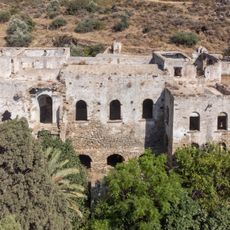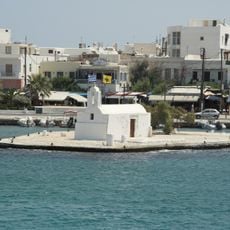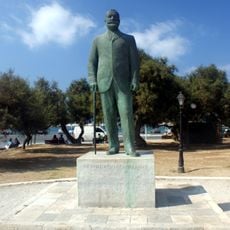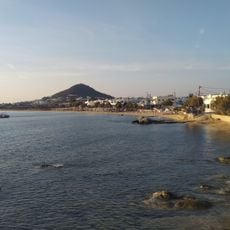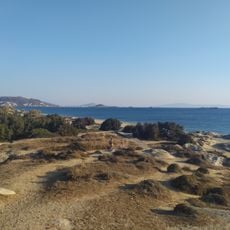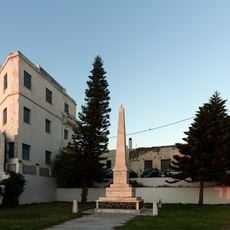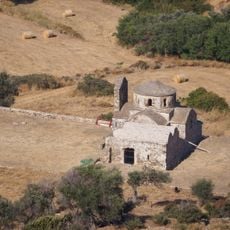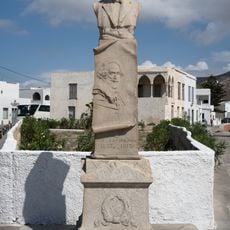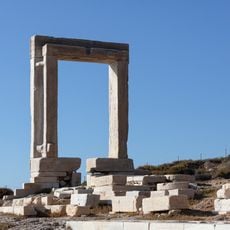
Sanctuary of Yria, Archaeological site in Livadi valley, Naxos, Greece.
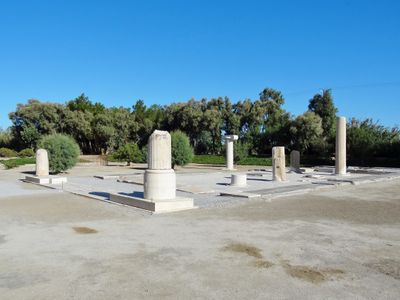
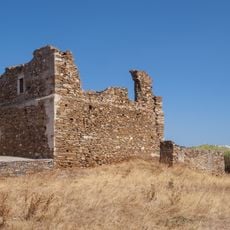
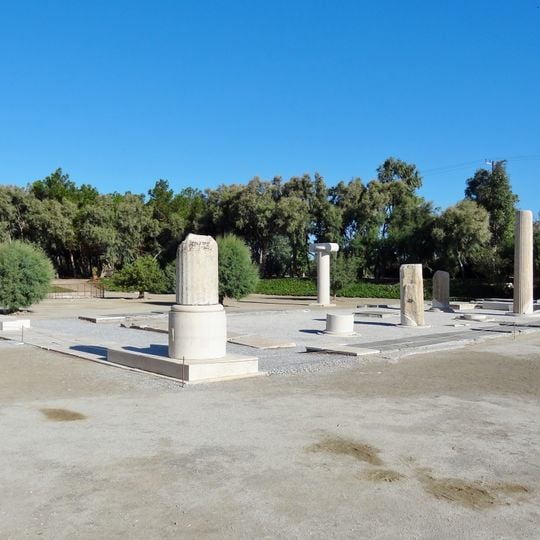
The sanctuary of Yria is an open-air archaeological site in the Livadi valley on the island of Naxos, where four successive temples were built one on top of the other over many centuries. Marble fragments, column drums and foundation walls from different building phases are visible across the site today.
A fertility cult met in the open at the mouth of the Byblos stream from the 14th century BCE, and a marble basin for offerings stood on a small hill in the marsh. Around 800 BCE a wooden and mud-brick temple of 5 × 10 m replaced it, rebuilt around 730 BCE as a granite building of about 160 m². Around 680 BCE the interior was reworked with wooden columns on rounded marble bases and a prostasis of four Ionic wooden columns was added at the south; from 580 to 570 BCE the fourth temple rose as an Ionic hekatompedon of 13.5 × 28.3 m, its marble roof by the Naxian mason Byzes. Work stopped around 550/540 BCE, perhaps when the tyrant Lygdamis took power and blocked private dedications.
The sanctuary sits in the Livadi valley on Naxos and was dedicated to Dionysus, the god of wine and festivity. Visitors walking through the site today can see how each new temple was built directly over the remains of the previous one, keeping the same sacred ground in use across generations.
The site is in the Livadi valley, not far from the village of Vivlos, and is easy to reach by car or bicycle from Naxos Town. Bring water and wear sturdy shoes, as there is little shade and the ground can be uneven underfoot.
The fourth temple, begun around 580–570 BCE, is considered the earliest Ionic prostylos: four marble columns across the front, eight inside, and a marble roof laid by the Naxian mason Byzes. Work stopped around 550–540 BCE and the columns were left in unfinished stages, which is why their fluting varies from 24 to 36 grooves.
The community of curious travelers
AroundUs brings together thousands of curated places, local tips, and hidden gems, enriched daily by 93,166 contributors worldwide.