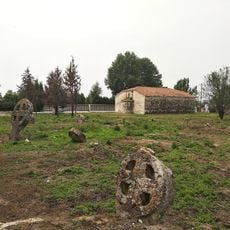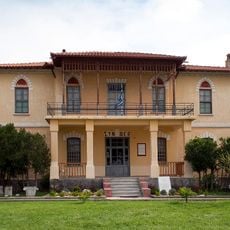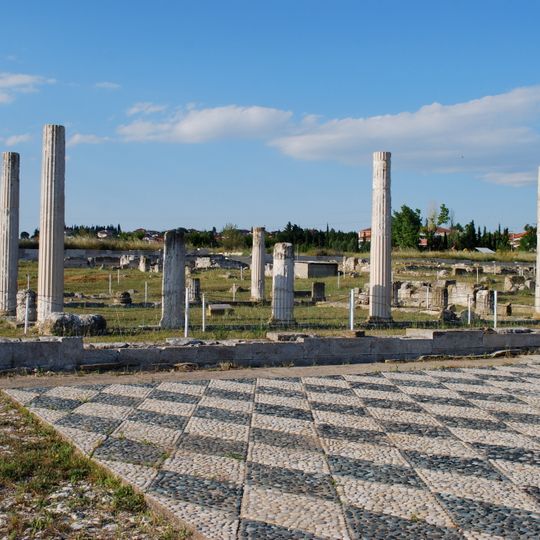
Pella archaeological site, Archaeological site in Pella Municipality, Greece.
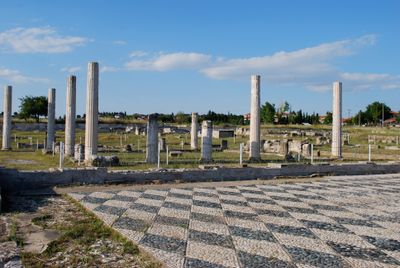
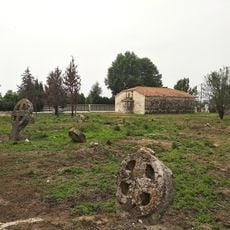
Pella archaeological site covers about 70,000 sq m at the western edge of the modern village of Pella. Its Hellenistic grid has blocks 46–47 m wide and 110–152 m long, separated by streets 6 m and 9 m wide; two paved avenues led from the harbour to the Agora. The palace lies north on a hill, outside this site.
King Archelaos moved the Macedonian capital from Aigai to Pella around 400 BC, on or near an earlier settlement by the Thermaic Gulf. Under Philip II and Alexander the Great the city expanded into a major metropolis, and Kassandros reorganised it at its height. After the Roman conquest of 168 BC it declined, and a probable earthquake in the early 1st century BC destroyed much of it; a new Colonia Pellensis was founded at Nea Pella in 30 AD.
Residential buildings display intricate floor mosaics showing mythological scenes that reflect the artistic skill and wealth of ancient Macedonian inhabitants. These decorated homes reveal how the city's elite lived and valued beauty in their daily spaces.
The site is accessible year-round during regular visiting hours with clearly marked pathways through the excavation areas. Visitors should wear comfortable shoes as the ancient structures create uneven walking surfaces throughout the grounds.
The site preserves a network of water supply channels that demonstrate how advanced Hellenistic engineering methods were at the time. These underground systems reveal practical solutions for providing water to the ancient urban population.
The community of curious travelers
AroundUs brings together thousands of curated places, local tips, and hidden gems, enriched daily by 94,069 contributors worldwide.