Aigai, Archaeological site in Vergina, Greece
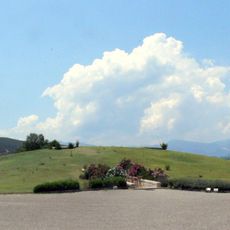
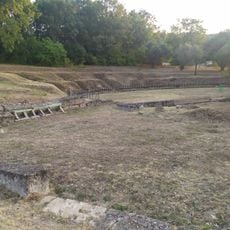
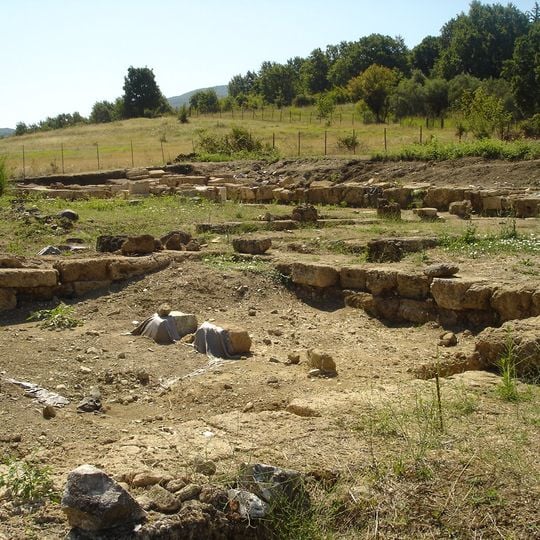
Aigai is the ancient capital of Macedon near modern Vergina, where low stone foundations of terraced walls run across tan earth and gravel. The site includes a palace of about 12,500 square metres built by Philip II, with a rectangular main building 104.5 by 88.5 metres around a central courtyard with Doric colonnades. A stepped stone platform with pale steps and low side walls rises at the base of a grassy slope, bordered by flowering shrubs.
Founded as Macedon's first capital in the 7th century BC, the city grew in power under Philip II who transformed the kingdom into a major force. The site remained important until Roman conquest ended Macedonian independence.
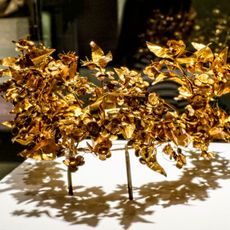
Aigai's name comes from the Greek word for goat, aigai, after the myth that Perdiccas I founded the city where white-horned goats rested at dawn. The city remained the sacred hearth of the Argead dynasty: royal weddings, burials and the proclamation of Alexander the Great took place here. In 2008, excavators found a gold oak-leaf crown in a bronze hydria at the sanctuary of Eukleia, possibly linked to Alexander's son.
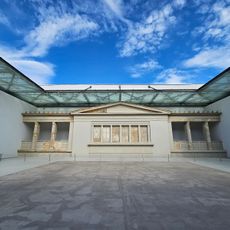
Wear good walking shoes because the terrain is uneven and you will move between different sections of the site on foot. An on-site museum provides shelter and displays the main artifacts from the excavations.
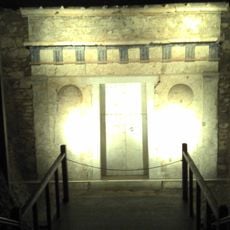
The tomb of King Philip II was found completely undisturbed in 1977, containing thousands of objects in perfect condition inside the burial chamber. This discovery ranks among the most important archaeological finds of the modern era and revealed details about royal life never seen before.
The community of curious travelers
AroundUs brings together thousands of curated places, local tips, and hidden gems, enriched daily by 94,388 contributors worldwide.