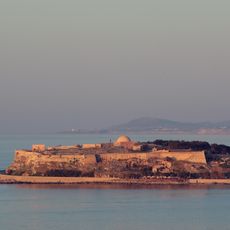
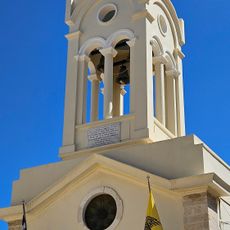
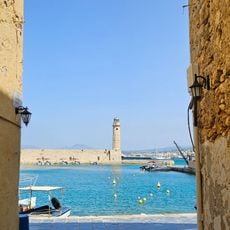
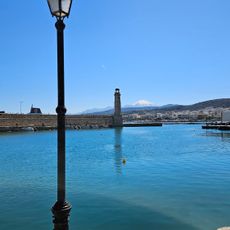
Rhithymna, Archaeological site in Rethymno, Greece.
Rhithymna is an ancient city on the northern coast of Crete with archaeological remains spread across a large area. There you can find foundations of buildings, walls, and other structures from different historical periods.
Rhithymna was a polis on Crete's north coast, at the site of today's Rethymno; occupation there dates at least to the Late Minoan III period, when tombs were cut in the area. It struck its own coins on the Aeginetan standard from about 330 BC. In the late 2nd century BC it was refounded as Arsinoe, and the old name returned in the 1st century BC. By the early 3rd century AD, according to Claudius Aelianus, it was very small, perhaps little more than a village.
Rhithymna struck its own coins from about 330 BC, modelled on Aeginetan types, and maritime emblems appear on them. The city was refounded in the late 2nd century BC as Arsinoe, and its old name returned in the 1st century BC. Citizens were called Rhithymnios and Rhithymniatēs.
Ancient Rhithymna lies beneath the modern city of Rethymno, so there are no separate excavated pathways to follow; only scattered remains such as late Roman house foundations have been found. Most of what is known comes from ancient writers, since later building has prevented large-scale excavation. Objects and inscriptions from the wider Rethymno regional unit are displayed in the city's Archaeological Museum.
Ancient Rhithymna minted its own coins from about 330 BC, and maritime emblems appear on them. The city was refounded in the late 2nd century BC under the name Arsinoe, and the old name returned in the 1st century BC. Little of the ancient town survives because the modern city lies directly on top of it.
The community of curious travelers
AroundUs brings together thousands of curated places, local tips, and hidden gems, enriched daily by 94,526 contributors worldwide.