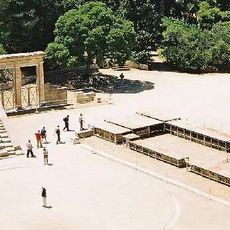
Stadium of Epidaurus, archaeological site in Greece
The Stadium of Epidaurus is a rectangular ancient Greek track about 181 m long and 20.6 m wide, built on a natural east-west slope with earthen banks on the north and south sides forming the seating. Stone starting and finishing lines lie at the west and east ends, and stone posts divide the length into six equal sections. Some rows of seats are cut directly into the rock.
The stadium was built in the late 4th century BC for the Asclepieia, games held every four years at Epidaurus in honour of Asclepius, the god of medicine. Contests continued until the Late Roman Empire, when they were gradually abandoned around the 3rd century AD. The vaulted tunnel through the embankment that let athletes enter from the gymnasium has since been filled in.
The stadium was closely tied to the Sanctuary of Asclepius, attracting pilgrims seeking healing and spiritual renewal. Spectators gathered here not only to watch athletic contests but also to participate in religious festivals that honored the gods and celebrated community life.
Visitors should wear comfortable shoes since the stone surfaces are uneven and exploration requires climbing and walking. Early morning or late afternoon visits work best to avoid midday heat and crowds, especially during summer months when temperatures can be quite high.
A vaulted underground passage through the embankment once let athletes enter from the gymnasium; it has since been filled in. The track is marked by stone posts set 32 metres apart, and stone slabs mark the start and finish lines.
The community of curious travelers
AroundUs brings together thousands of curated places, local tips, and hidden gems, enriched daily by 94,011 contributors worldwide.