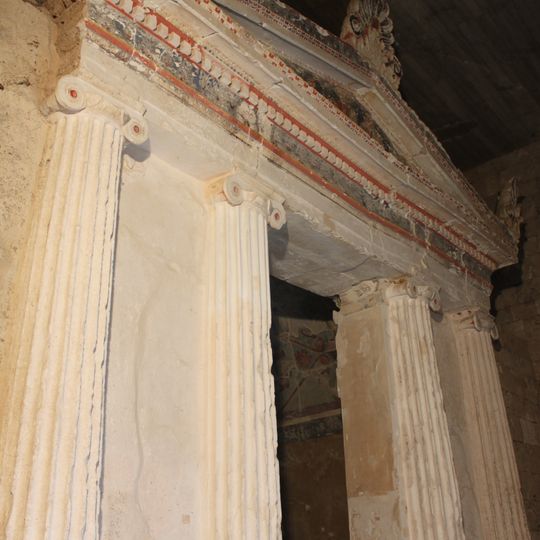
Anthemion tomb, Macedonian tomb in Lefkadia, Greece.
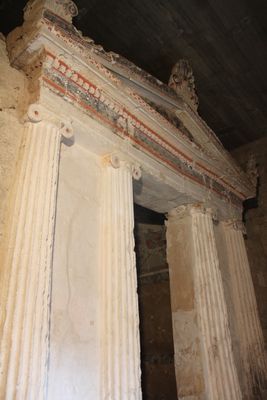
The Anthemion tomb is an ancient burial site in Lefkadia with two vaulted chambers and a facade in the Ionic style, decorated with palmette motifs. The architecture shows the craftsmanship and wealth of those buried here.
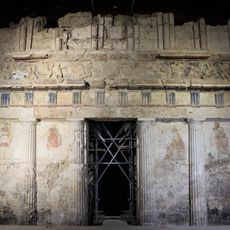
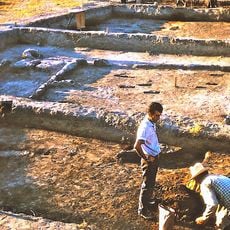
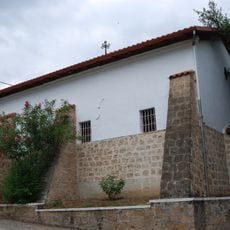
Built in the first half of the 3rd century BC, the tomb was found in 1971 after illegal digging and excavated by Katerina Rhomiopoulou between 1971 and 1973. Six poros stone blocks sealed its entrance, and the marble double door was already shattered in antiquity when robbers took the larnax holding the ashes. A metal shelter was erected over the monument in 1988.
The tomb's name comes from the six palmettes and water lilies painted on the light blue ceiling of the antechamber, and from the palmette-shaped antefixes at the pediment's apex and corners. In the tympanum, an old man holds a temple key, which some scholars read as a religious office and others as Hades with Persephone.
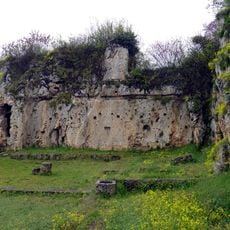
The tomb lies at Lefkadia, about 230 m from the Tomb of Judgement and some 990 m from the Tomb of Lyson and Kallikles, near Naousa in Imathia. A metal shelter erected in 1988 covers the monument, and restoration work has continued since. The chambers are entered through the painted facade, whose entrance was sealed with six poros blocks.
The antefixes shaped like palmettes on the pediment apex and corners are unusual in Macedonian tombs, and the painted ceiling of six palmettes and water lilies on light blue gave the tomb its modern name. Six poros stone blocks sealed the entrance.
The community of curious travelers
AroundUs brings together thousands of curated places, local tips, and hidden gems, enriched daily by 93,677 contributors worldwide.