Saint Mary of Dovra Monastery, Orthodox monastery in Veria Municipality, Greece
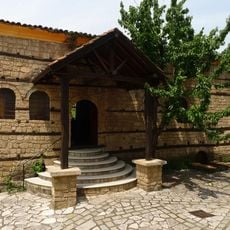
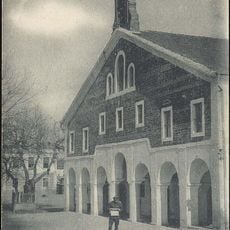
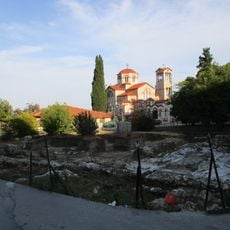
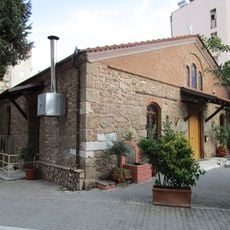
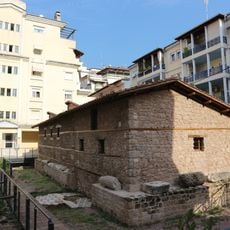
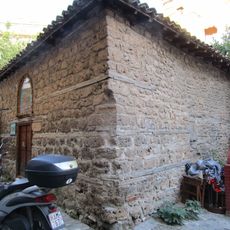
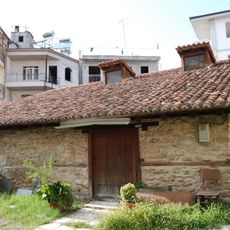
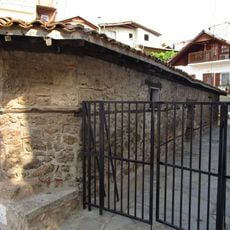
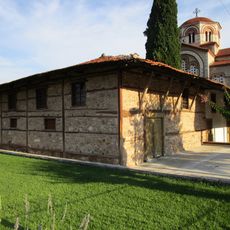
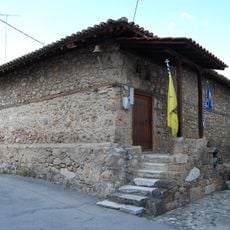
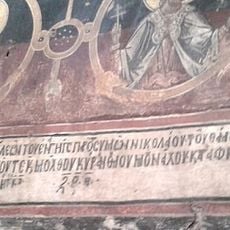
Saint Mary of Dovra Monastery stands on the eastern slopes of the Vermio range, 5.5 km northwest of Veria's centre. Its katholikon, dedicated to the Dormition of the Virgin, is a three-aisled basilica with a wooden roof and an exonarthex, built in 1844 according to a dedicatory inscription above the entrance door. A Byzantine relief is set into the church's south wall.
The monastery became a command center for Macedonian leaders during the Greek War of Independence in 1822, but Ottoman forces destroyed it during the conflict. It was later rebuilt and reestablished as an active monastery in 1995 under the jurisdiction of the Holy Metropolis of Beroia.
The monastery's name comes from the village of Dovra (also Tobra), destroyed by Ottoman forces in 1822; a 1643 source records the older name Panagia Kokkometriotissa. Since 1995 it has been a male coenobitic community of 18 monks, and a school of Byzantine iconography operates on the grounds. The Kemeiliarcheio, opened in 2022, displays relics including the epitrachelion and belt of Saint Chrysostomos of Smyrna.
The monastery sits 5.5 km northwest of central Veria, on the eastern slopes of the Vermio range, reached by an asphalt road. The grounds hold the Metropolis summer camps and the Centre for Byzantine Arts, so groups may be present. The katholikon, rebuilt in 1844, is a three-aisled basilica with a wooden roof and outer portico.
From 1950 to 1986, the monastery grounds served as a Children's Home that sheltered orphaned children under the care of welfare organizations. This chapter in the site's past shows how the space was adapted for social purposes beyond its religious functions.
The community of curious travelers
AroundUs brings together thousands of curated places, local tips, and hidden gems, enriched daily by 92,908 contributors worldwide.