Temple of Apollo Epicurius in Bassae, Ancient temple in Bassae, Greece
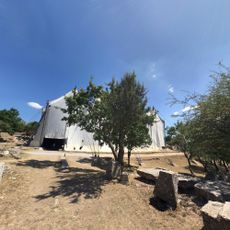
The Temple of Apollo Epicurius sits on a steep mountainside at about 1,130 meters (3,700 feet) elevation in the highlands between Elis, Arcadia, and Messenia. The structure combines Doric and Ionic architectural elements and features an unusual north-south orientation rather than the traditional east-west direction.
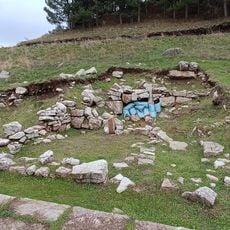
The temple was built between 430 and 420 BCE by the people of Phigaleia, who dedicated it to Apollo Epikourios after he saved them from a plague during the Peloponnesian War. Pausanias attributes its design to Iktinos, architect of the Parthenon. It replaced an earlier sanctuary of Apollo Bassitas founded in the 7th century BCE, which had phases around 600 and 500 BCE. The site was rediscovered in 1765 by Joachim Bocher.
The temple was dedicated to Apollo, whom local people called upon for protection from illness and disease. People traveled to this remote location seeking healing and divine guidance.
The temple sits roughly 14 kilometers (9 miles) south of Andritsaina in a remote mountain location that requires careful planning to reach. The journey is challenging due to the elevation and limited transportation, so visitors should prepare well in advance.
The temple's interior frieze, now in the British Museum since 1814, is the only surviving inner-cell frieze from Greek antiquity. Its 23 slabs are split unevenly: 12 show the Amazonomachy and 11 the Centauromachy, and the centaur battle takes place outdoors with no women present, unlike the usual versions.
The community of curious travelers
AroundUs brings together thousands of curated places, local tips, and hidden gems, enriched daily by 93,391 contributors worldwide.