Temple of Athena Alea, Ancient Greek temple in Tegea, Greece
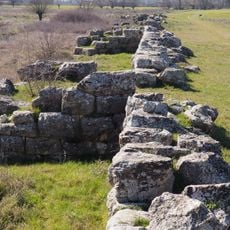
The Temple of Athena Alea at Tegea was a Doric peripteral temple of 6 by 14 columns, built entirely of Doliana marble on a conglomerate foundation. Its cella was lined with seven Corinthian half-columns along the north and south walls, and its east and west pediments carried sculptures by Scopas depicting the Calydonian boar hunt and Telephos fighting Achilles.
The sanctuary existed by the Mycenaean period, and a monumental Doric temple with wooden columns was built in the late 7th century BC. It burned in 395 BC, and Scopas of Paros designed the marble successor around 365 BC. That temple, one of the last great Doric buildings, was destroyed by an earthquake in the 6th century AD.
The epithet Alea merged Athena with a local goddess; Pausanias was told the temple was founded by the hero Aleus, son of Apheidas. Two festivals were held here, the Aleaia and the Halotia, the latter marking a victory over the Spartans. Pausanias also records the shield of Marpessa, who led the women of Tegea against the Spartans.
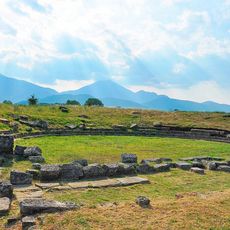
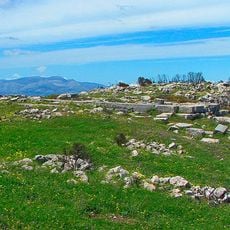
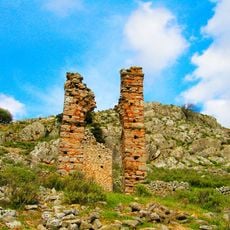
The sanctuary lies at Palea Episkopi near Alea, about 10 km from Tripoli in Arcadia, southwest of ancient Tegea. Excavations by the French School at Athens from 1900 uncovered the temple foundation, and the marble blocks of the classical temple remain on site. The ruins sit in an open field, so plan for sun and uneven ground.
The famous ivory statue of the goddess that once stood inside the temple was transported to Rome in ancient times and displayed in an imperial building. This removal shows how prized the artwork was beyond the borders of ancient Greece.
The community of curious travelers
AroundUs brings together thousands of curated places, local tips, and hidden gems, enriched daily by 92,928 contributors worldwide.